






 บ้าน
บ้าน ผลิตภัณฑ์
29+ years in pharmaceutical machinery, covering capsule filling, tablet pressing, blister packaging, tablet and capsule counting, cartoning, GMP production, and overseas machine service.

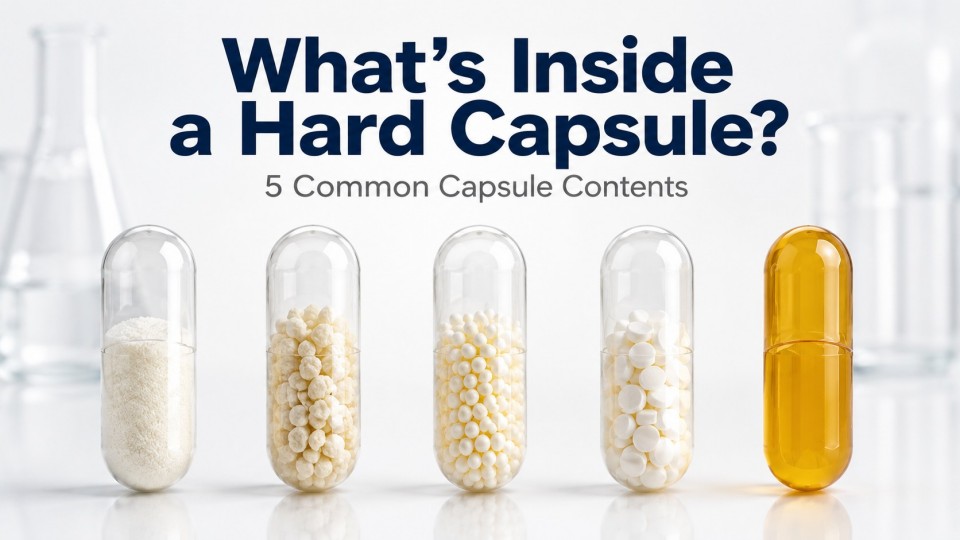
เมื่อคุณเปิดแคปซูลแข็ง คุณอาจคาดว่าจะเห็นผงอยู่ข้างใน ผงเป็นส่วนประกอบที่พบได้ทั่วไป แต่ก็ไม่ใช่เพียงส่วนประกอบเดียวที่สามารถบรรจุอยู่ภายในแคปซูลได้ ทั้งนี้ขึ้นอยู่กับสูตรและวิธีการผลิตส่วนประกอบภายในแคปซูลอาจรวมถึงผง เม็ดเล็กๆ เม็ดกลม ยาเม็ดขนาดเล็ก และของเหลวหรือสารกึ่งแข็งที่เหมาะสม
รูปแบบการบรรจุเหล่านี้ไม่ได้แตกต่างกันเพียงแค่รูปลักษณ์ภายนอกเท่านั้น ผงละเอียดมีพฤติกรรมที่แตกต่างจากเม็ดที่ไหลได้สะดวก ในขณะที่ยาเม็ดขนาดเล็กจำเป็นต้องได้รับการจัดการเป็นหน่วยย่อยแต่ละหน่วยแคปซูลแข็งบรรจุของเหลวจำเป็นต้องใช้วิธีการให้ยาแบบอื่น และโดยปกติแล้วต้องพิจารณาเรื่องการปิดผนึกเพิ่มเติมด้วย
นั่นหมายความว่าวัสดุภายในแคปซูลส่งผลโดยตรงต่อวิธีการผลิตผลิตภัณฑ์และรูปแบบของเครื่องบรรจุแคปซูลที่จำเป็น เครื่องบรรจุแคปซูลที่ออกแบบมาสำหรับผงไม่ควรนำมาใช้กับเม็ดเล็กๆ ยาเม็ดขนาดเล็ก หรือของเหลวด้วยกลไกการจ่ายยาแบบเดียวกันโดยอัตโนมัติ
| ส่วนประกอบภายในแคปซูล | หน้าตาเป็นอย่างไร | วิธีการเติมแบบทั่วไป |
|---|---|---|
| ผง | อนุภาคแห้งละเอียดหรือผงผสม | ระบบจ่ายผงยา |
| เม็ด | อนุภาคขนาดใหญ่และมีรูปร่างไม่สม่ำเสมอ | การให้อาหารเม็ดและการให้ยา |
| เม็ด | อนุภาคขนาดเล็ก มักมีรูปร่างกลม | ระบบจ่ายเม็ดยา |
| ยาเม็ดขนาดเล็ก | ยาเม็ดอัดขนาดเล็ก | ระบบแผ่น/ดรัมวัดปริมาตร (นับตามปริมาตร) |
| ของเหลวและของกึ่งแข็ง | น้ำมัน สารละลายที่เหมาะสม สารแขวนลอย หรือสารกึ่งแข็ง | การจ่ายยาด้วยปั๊มและการซีลเพิ่มเติม |
ส่วนต่อไปนี้จะอธิบายว่าวัสดุบรรจุแต่ละประเภทคืออะไร เหตุใดผู้ผลิตจึงใช้วัสดุประเภทนั้น และวัสดุที่ใช้เปลี่ยนแปลงกระบวนการบรรจุแคปซูลอย่างไร
แคปซูลแข็งมีส่วนประกอบหลักสองส่วน: ก.ร่างกายซึ่งรับวัสดุถม และหมวกซึ่งจะปิดทับร่างกายหลังจากบรรจุแล้ว เปลือกและวัสดุภายในเป็นส่วนประกอบที่แยกจากกันของแคปซูลที่เสร็จสมบูรณ์
เดอะเปลือกแคปซูลแคปซูลสามารถทำจากวัสดุต่างๆ เช่น เจลาตินหรือ HPMC ได้ ในขณะที่ส่วนประกอบภายในแคปซูลคือสูตรยาที่บรรจุอยู่ภายในเปลือกหุ้มนั้น ความแตกต่างนี้มีความสำคัญ เพราะการพูดคุยเกี่ยวกับสิ่งที่ "ทำมาจาก" แคปซูลมักจะสับสนระหว่างวัสดุเปลือกหุ้มกับวัสดุที่บรรจุอยู่ภายใน
แคปซูลแข็งสามารถบรรจุผง เม็ดเล็กๆ เม็ดอัด และเม็ดยาขนาดเล็กได้ นอกจากนี้ยังสามารถบรรจุของเหลวที่ไม่ใช่น้ำและสูตรกึ่งของแข็งที่เหมาะสมลงในแคปซูลแข็งได้เช่นกัน หากเปลือกแคปซูล สูตรยา กระบวนการบรรจุแคปซูล และวิธีการปิดผนึกเข้ากันได้ คำศัพท์เกี่ยวกับรูปแบบยาขององค์การอาหารและยา (FDA) ยังแยกแยะแคปซูลที่บรรจุผง แคปซูลที่บรรจุเม็ดอัด และแคปซูลที่บรรจุของเหลวด้วย
แคปซูลอาจบรรจุวัสดุมากกว่าหนึ่งชนิดได้เช่นกัน สูตรบางสูตรใช้...การเติมแบบผสมเช่น เม็ดเล็กๆ ผสมกับผงยา หรือเม็ดเล็กๆ ผสมกับเม็ดเล็กๆ วิธีนี้ช่วยให้ส่วนประกอบต่างๆ แยกออกจากกันได้เมื่อสูตรหรือข้อกำหนดการปลดปล่อยยาแตกต่างกัน
ดังนั้น การเลือกส่วนประกอบภายในแคปซูลจึงเริ่มต้นจากการกำหนดสูตร มากกว่าที่จะเริ่มต้นจากตัวแคปซูลเองเครื่องบรรจุแคปซูลผู้ผลิตจะทำการตรวจสอบก่อนว่ามีอะไรอยู่ภายในแคปซูล ปริมาณที่ต้องบรรจุ และพฤติกรรมของวัสดุในระหว่างการผลิต จากนั้นจึงสามารถเลือกการกำหนดค่าเครื่องบรรจุแคปซูลและปริมาณยาที่เหมาะสมได้
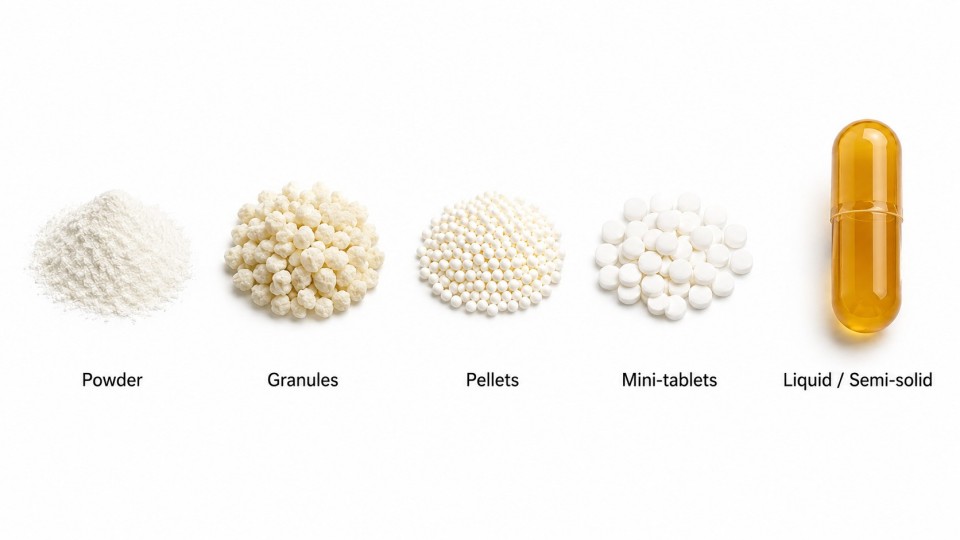
ผงเป็นหนึ่งในวัสดุที่พบได้บ่อยที่สุดในแคปซูลแข็ง ในผลิตภัณฑ์หลายชนิด ผงในแคปซูลเป็นส่วนผสมของส่วนประกอบหลักและสารเพิ่มปริมาณที่เลือกใช้เพื่อช่วยในกระบวนการผลิต ความคงตัว หรือประสิทธิภาพของผลิตภัณฑ์
ผงยาแต่ละชนิดมีพฤติกรรมไม่เหมือนกัน ขนาดอนุภาค การกระจายขนาดอนุภาค ความหนาแน่น ความชื้น ความเหนียวแน่น และความสามารถในการไหล ล้วนส่งผลต่อการเคลื่อนที่ของผงยาผ่านเครื่องบรรจุแคปซูล และความสม่ำเสมอในการจ่ายยา
ในเครื่องบรรจุแคปซูลอัตโนมัติที่ใช้ระบบจานจ่ายยา ผงยาจะเข้าสู่รูจ่ายยาและถูกอัดแน่นโดยแท่งบรรจุ ความหนาของจานจ่ายยาจะคงที่ตลอดการทำงาน ในขณะที่ความลึกของแท่งบรรจุเป็นหนึ่งในค่าที่ปรับได้เพื่อควบคุมปริมาณยาที่บรรจุ
การตั้งค่าเครื่องจักรเป็นเพียงส่วนหนึ่งของกระบวนการเท่านั้น คุณสมบัติของผง วัสดุที่จัดหา สภาวะการจ่ายยา ความแม่นยำเชิงกล และการตรวจสอบการผลิต ล้วนมีส่วนช่วยให้การบรรจุมีความสม่ำเสมอ
เม็ดแกรนูลเป็นอนุภาคขนาดใหญ่ที่รวมตัวกันจากอนุภาคผงขนาดเล็ก โดยทั่วไปจะมีรูปร่างไม่สม่ำเสมอกว่าเม็ดพลาสติก และขนาดอาจแตกต่างกันไปขึ้นอยู่กับวิธีการผลิต
ผู้ผลิตอาจใช้กระบวนการทำให้เป็นเม็ดเพื่อปรับปรุงการจัดการและการไหลในสูตรที่เหมาะสม หรือเพื่อลดการแยกตัวของส่วนผสมต่างๆ ภายในแคปซูลแข็ง เม็ดเหล่านี้มักมีลักษณะคล้ายเมล็ดพืชหยาบมากกว่าผงละเอียด
แม้ว่าเม็ดและผงจะเป็นวัสดุบรรจุแคปซูลที่เป็นของแข็งเหมือนกัน แต่ลักษณะการป้อนวัสดุนั้นแตกต่างกัน ขนาดของเม็ด ความหนาแน่น ความเปราะ และพฤติกรรมการไหลต้องสอดคล้องกับการป้อนและการจ่ายยาของเครื่องบรรจุแคปซูล
ด้วยเหตุนี้ ผู้จำหน่ายเครื่องบรรจุแคปซูลจึงจำเป็นต้องทราบว่าเนื้อหาแคปซูลที่วางแผนไว้เป็นเม็ดเล็กๆ ไม่ใช่แค่ขนาดแคปซูลและปริมาณผลผลิตที่ต้องการเท่านั้น
เม็ดแคปซูลเม็ดเล็กๆ เหล่านี้มักมีขนาดค่อนข้างสม่ำเสมอและมีรูปร่างเป็นระเบียบกว่าเม็ดทั่วไป แคปซูลที่บรรจุเม็ดเล็กๆ เหล่านี้อาจมีเม็ดเล็กๆ จำนวนมากอยู่ภายใน
เม็ดแคปซูลมีประโยชน์เมื่อผู้ผลิตต้องการแบ่งสูตรยาออกเป็นหน่วยย่อยขนาดเล็กหลายหน่วย นอกจากนี้ยังสามารถผลิตหรือเคลือบเม็ดแคปซูลที่มีขนาดแตกต่างกัน แล้วนำมารวมกันภายในแคปซูลเดียวกันได้ ทำให้เม็ดแคปซูลมีประโยชน์สำหรับสูตรยาที่มีอนุภาคหลายชนิด และผลิตภัณฑ์ที่ส่วนประกอบต่างๆ จำเป็นต้องแยกออกจากกันทางกายภาพ
นอกจากนี้ เม็ดยาต้องใช้วิธีการบรรจุที่แตกต่างออกไป แทนที่จะอัดผงยาให้เป็นก้อน ระบบการจ่ายยาจะวัดปริมาณอนุภาคที่เคลื่อนที่ได้อย่างอิสระ ในขณะเดียวกันก็ลดความเสียหายและรักษาปริมาณที่สม่ำเสมอ
ดังนั้น การจัดเรียงผงยาแบบมาตรฐานในเครื่องบรรจุแคปซูลจึงไม่ควรถูกมองว่าเป็นการจัดเรียงสำหรับการบรรจุเม็ดยาโดยอัตโนมัติ ควรเลือกส่วนประกอบการจ่ายยาเฉพาะหรือที่ดัดแปลงให้เหมาะสมกับผลิตภัณฑ์และการออกแบบเครื่องบรรจุแคปซูล
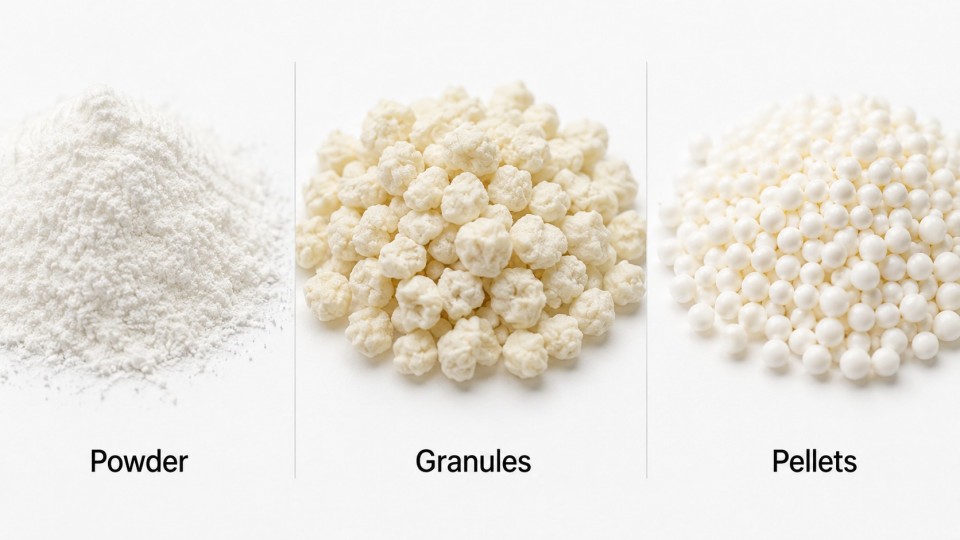
ผง เม็ด และเม็ดเล็กๆ มีรูปแบบอนุภาคที่แตกต่างกัน
ยาเม็ดขนาดเล็กเป็นยาเม็ดอัดขนาดเล็กที่ออกแบบมาให้พอดีกับแคปซูล ซึ่งแสดงให้เห็นว่าคำตอบของคำถามที่ว่า “อะไรอยู่ข้างในแคปซูล?” นั้น ไม่ได้หมายถึงผงหรืออนุภาคขนาดเล็กเสมอไป
แคปซูลแข็งสามารถบรรจุยาเม็ดขนาดเล็กหนึ่งเม็ด ยาเม็ดขนาดเล็กหลายเม็ด หรือยาเม็ดขนาดเล็กผสมกับส่วนประกอบอื่นๆ ในแคปซูล เช่น เม็ดเล็กๆ การอัดเป็นหน่วยแยกกันจะช่วยให้ส่วนประกอบต่างๆ แยกออกจากกันภายในแคปซูลเดียวกันได้
จากมุมมองของเครื่องบรรจุแคปซูล ยาเม็ดขนาดเล็กนั้นแตกต่างจากผงยามาก เนื่องจากเป็นชิ้นส่วนแยกชิ้น เครื่องบรรจุแคปซูลจึงต้องการระบบวัดปริมาณเชิงกลที่เหมาะสม ซึ่งสามารถส่งปริมาณที่ต้องการลงในแต่ละแคปซูลได้
ดังนั้น จำนวนและขนาดของเม็ดยาขนาดเล็กจึงมีความสำคัญเมื่อกำหนดรายละเอียดโครงการเครื่องบรรจุแคปซูล
แคปซูลแข็งยังสามารถบรรจุของเหลวและสารกึ่งแข็งที่เหมาะสมได้อีกด้วย แม้ว่าผลิตภัณฑ์ที่บรรจุของเหลวมักจะเกี่ยวข้องกับแคปซูลนิ่ม แต่แคปซูลแข็งที่บรรจุของเหลวก็เป็นรูปแบบยาที่ได้รับการยอมรับเช่นกัน
สูตรการผลิตต้องเข้ากันได้กับเปลือกแคปซูล ความหนืด องค์ประกอบ อุณหภูมิในการบรรจุ ปฏิกิริยากับเปลือกแคปซูล และความเสี่ยงต่อการรั่วไหล ล้วนส่งผลต่อการผลิตได้
เอเครื่องบรรจุแคปซูลเหลวโดยทั่วไปจะใช้ระบบปั๊มจ่ายยาแบบควบคุมเพื่อส่งปริมาณที่ต้องการเข้าไปในตัวแคปซูล หลังจากบรรจุแล้ว ฝาและตัวแคปซูลจะถูกปิด และแคปซูลแข็งที่บรรจุของเหลวมักต้องมีการปิดผนึกหรือรัดด้วยแถบที่เหมาะสมเพื่อลดความเสี่ยงของการรั่วไหล
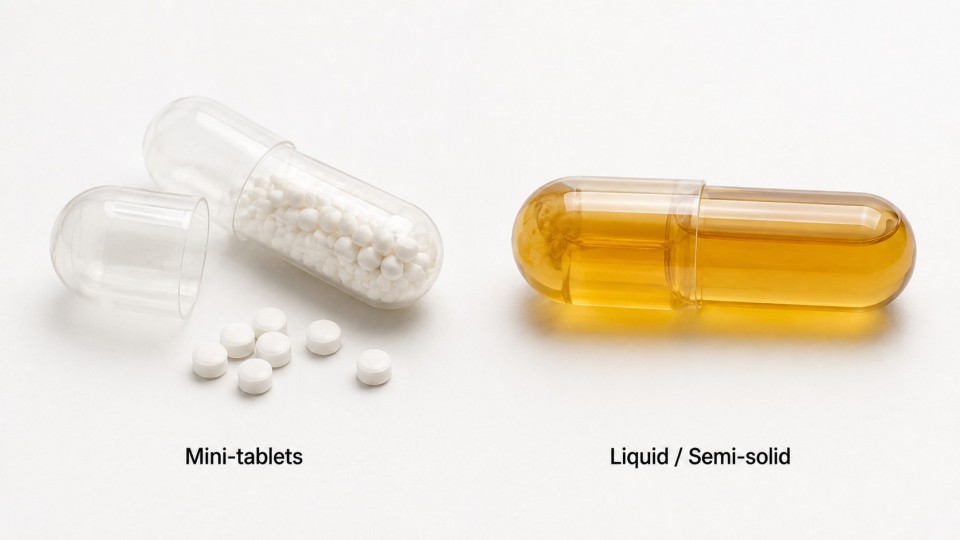
ไม่มีรูปแบบการบรรจุแคปซูลที่ดีที่สุดเพียงรูปแบบเดียวสำหรับผลิตภัณฑ์ทุกชนิด ผู้ผลิตเลือกใช้ผง เม็ดเล็กๆ เม็ดอัด เม็ดเล็ก หรือของเหลว ตามสูตรและกระบวนการผลิต
ผงยาเหมาะสำหรับใช้เมื่อส่วนผสมสามารถผสมและตวงได้อย่างสม่ำเสมอในรูปของสารผสมแห้ง เม็ดเล็กๆ มีคุณสมบัติในการจัดการที่ดีกว่า เม็ดเล็กๆ และเม็ดยาขนาดเล็กจะสร้างหน่วยแยกต่างหากภายในแคปซูล ในขณะที่ระบบของเหลวหรือกึ่งของแข็งที่เหมาะสมเป็นอีกทางเลือกหนึ่งสำหรับสูตรยาที่จัดการได้ดีกว่าในรูปแบบทางกายภาพนั้น
รูปแบบการบรรจุที่แตกต่างกันยังช่วยรองรับการออกแบบผลิตภัณฑ์ที่ซับซ้อนมากขึ้นได้อีกด้วย เม็ดเล็กๆ แต่ละชนิดสามารถคงความแตกต่างกันภายในแคปซูลเดียวกันได้ ในขณะที่ยาเม็ดขนาดเล็กสามารถผสมกับเม็ดเล็กๆ หรือวัสดุบรรจุอื่นๆ ที่เหมาะสมได้
| ความต้องการด้านการผลิตหรือการกำหนดสูตร | Possible Capsule Content |
|---|---|
| Conventional dry blend | Powder |
| Larger particulate fill | Granules |
| Multiparticulate formulation | Pellets |
| Separate compressed units | Mini-tablets |
| Suitable oil, liquid, or semi-solid formulation | Liquid or semi-solid |
| Multiple physically separate components | Combination fill |
These are not fixed one-to-one rules. The final choice depends on formulation development, product performance, manufacturability, capsule compatibility, and the availablecapsule filling process.
For capsule filling machine buyers, the key point is: capsule contents are decided by the product first, and the capsule filling machine configuration follows from that decision.
The basic job of a capsule filling machine is to separate the empty capsule body and cap, place the required contents into the body, close the capsule, and discharge the finished product. The dosing method changes with the material.
Powder can be handled by a dosing-disc system. Powder enters the dosing area, fills the dosing holes, is compacted by filling rods, and is transferred into the capsule bodies.
For dosing-disc capsule filling machines, filling-rod depth is an important adjustment used to control fill amount, while the dosing-disc thickness remains fixed during operation.
Granules are generally filled using volumetric, non-compression dosing rather than being compressed into a powder plug.
Free-flowing granules can enter a defined dosing chamber or slide-gate metering space mainly under gravity. Once the required volume has been measured, the granules are transferred into the capsule body.
Granule size, size distribution, bulk density, friability, and flow behavior influence how consistently the dosing volume fills. The exact dosing mechanism depends on the capsule filling machine design and the characteristics of the granules.
Pellets are also commonly filled using volumetric, non-compression dosing. Depending on the capsule filling machine design, free-flowing pellets and granules can use similar slide-gate, dosing-chamber, or other volumetric metering principles.
The main difference is that pellets, especially coated pellets, often require gentler handling to protect their shape and surface coating. Pellet size, flow behavior, coating characteristics, target quantity, and production speed should therefore be provided when specifying the capsule filling machine.
Mini-tablets are handled as individual solid units. A capsule filling machine can use a slat system or metering-drum system, which performs counting-by-volume. Cavities or metering spaces are designed to receive a defined number of mini-tablets and then transfer them into the capsule bodies.
A liquid capsule filling machine uses a pump-based dosing arrangement rather than a powder dosing mechanism. The system meters the formulation into the open capsule body, after which the capsule is closed and, when required, sealed or banded.
Temperature and viscosity can be important for certain semi-solid formulations because the material must remain suitable for pumping and dosing.
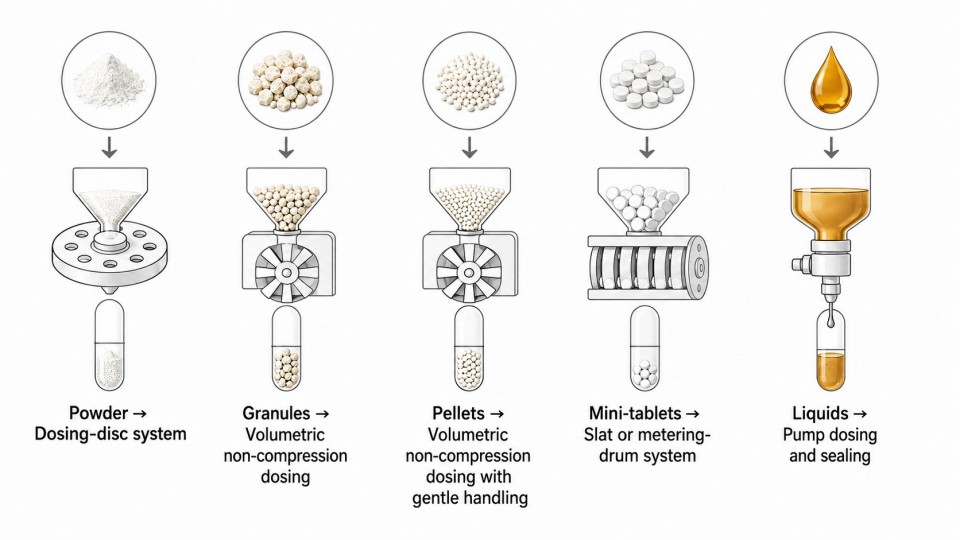
Different capsule contents require different dosing methods
If you are purchasing a capsule filling machine, specifying only the capsule size and required output is not enough. The supplier first needs to understand exactly what will be placed inside the capsule.
State whether the capsule contains powder, granules, pellets, mini-tablets, liquid, semi-solid material, or a combination.
For powder, bulk density and flow behavior are useful. For pellets and granules, particle size and size distribution become more important. For liquids, viscosity and filling temperature can affect the dosing approach.
Capsule size affects available internal volume and tooling. Common projects usecapsule sizes from #000 to #5, but the selected size must also provide enough space for the required capsule contents.
For powder, granules, or pellets, the supplier needs the required fill weight or volume. For mini-tablets, the required number of units and corresponding slat or metering-drum configuration need to be defined.
The capsule filling machine must match planned output. Capacity should be considered together with the material and dosing method rather than as an isolated specification.
If the capsule contains more than one component, explain this early. Powder plus pellets, several mini-tablets, or multiple pellet populations can require additional dosing stations or a different capsule filling machine configuration.
For liquid-filled hard capsules, the supplier should know the formulation type, viscosity range, capsule-shell compatibility, operating temperature, dosing requirements, and planned sealing process.
A conventional powder capsule filling machine should not be purchased on the assumption that it can later become a liquid capsule filling machine simply by changing ordinary powder tooling.
Manufacturers producing several products should consider how often they will change capsule sizes, fill materials, or dosing requirements. Frequent changeovers affect tooling, cleaning, adjustment time, and production scheduling.
As a pharmaceutical and packaging equipment supplier, Rich Packing works with manufacturers to match capsule contents, capsule size, target fill amount, production output, and special dosing requirements with the appropriate capsule filling machine configuration. When needed, the capsule filling process can also be considered together with downstream packaging requirements to build a more practical production setup.
A hard capsule can contain much more than powder. Capsule contents commonly include powders, granules, pellets, mini-tablets, and suitable liquids or semi-solids.
Each fill form has different physical characteristics and manufacturing requirements. Those differences determine how the material must be measured, fed, and transferred into the capsule.
For manufacturers and capsule filling machine buyers, the sequence is:
define the capsule contents → understand the material properties → determine the dosing method → select the appropriate capsule filling machine configuration.
Starting with what goes inside the capsule makes it easier to select a capsule filling machine that matches the actual production process rather than choosing one based only on capsule size or rated speed.
Powder is one of the most common capsule contents, but hard capsules can also contain granules, pellets, mini-tablets, and suitable liquids or semi-solids. The selected fill form depends on the formulation and production requirements.
Pellets divide the fill into many small units. Different pellet populations can also be manufactured or coated separately, allowing several types of units to be combined inside one capsule.
Yes. Suitable liquids and semi-solids can be filled into compatible hard capsule shells using dedicated liquid dosing systems. The formulation, shell compatibility, viscosity, filling conditions, and sealing method all need to be considered.
Yes. One or more mini-tablets can be placed inside a hard capsule, either alone or with other suitable capsule contents. The capsule filling machine needs an appropriate dosing system to meter the required number of mini-tablets into each capsule.
โดยปกติแล้วกลไกการจ่ายยาจะไม่เหมือนกัน ผง เม็ดเล็กๆ ยาเม็ดขนาดเล็ก และของเหลวมีพฤติกรรมที่แตกต่างกันและต้องการวิธีการป้อนและการจ่ายยาที่แตกต่างกัน เครื่องบรรจุแคปซูลต้องได้รับการกำหนดค่าให้เหมาะสมกับวัสดุที่บรรจุและข้อกำหนดในการผลิตจริง

29+ years in pharmaceutical machinery, covering capsule filling, tablet pressing, blister packaging, tablet and capsule counting, cartoning, GMP production, and overseas machine service.

ส่งอีเมล : manager@richpacking.cn
Building D, No. 226, Beishan Qiaotou Street, Haizhu District, Guangzhou City, Guangdong Province, China


 รองรับเครือข่าย IPv6