






 บ้าน
บ้าน ผลิตภัณฑ์
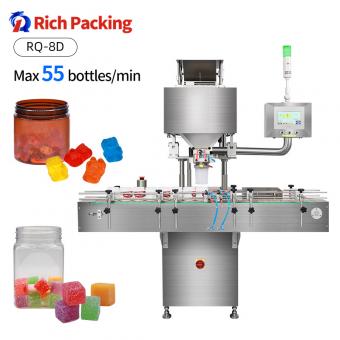
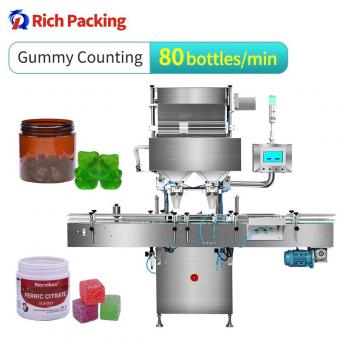
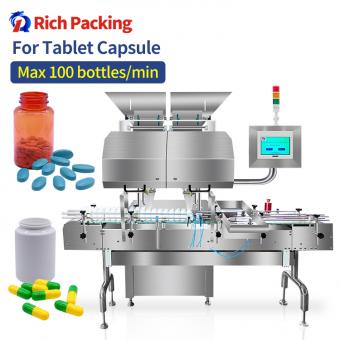
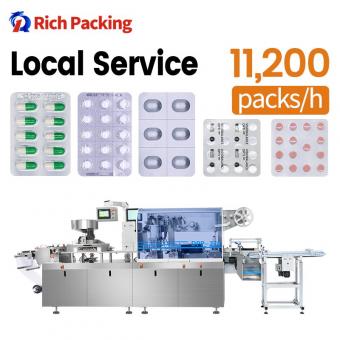
29+ years in pharmaceutical machinery, covering capsule filling, tablet pressing, blister packaging, tablet and capsule counting, cartoning, GMP production, and overseas machine service.

ในอุตสาหกรรมบรรจุภัณฑ์ยา วัสดุที่ใช้ในการผลิตเครื่องจักรนั้นไม่ใช่แค่เรื่องของการออกแบบอุปกรณ์เท่านั้น แต่ยังส่งผลโดยตรงต่อการปฏิบัติตามกฎระเบียบ ความปลอดภัยของผลิตภัณฑ์ และประสิทธิภาพการใช้งานในระยะยาวอีกด้วย
วัสดุทั่วไป เช่น สแตนเลส 304, สแตนเลส 316/316L, โลหะผสมอลูมิเนียม และ PTFE ต่างก็มีคุณสมบัติที่แตกต่างกันและถูกนำไปใช้ในชิ้นส่วนเครื่องจักรที่แตกต่างกัน แต่การเลือกวัสดุที่เหมาะสมเป็นเพียงขั้นตอนแรกเท่านั้น ผู้ผลิตยังต้องการวิธีการที่เชื่อถือได้ในการตรวจสอบว่าวัสดุที่ใช้จริงตรงกับเกรดที่ระบุไว้หรือไม่
ดังนั้น นอกเหนือจากการตรวจสอบใบรับรองแล้ว ควรทดสอบวัสดุเหล่านี้อย่างไร บทความนี้จะอธิบายถึงบทบาทของวัสดุที่ใช้ในการผลิตเครื่องจักรทั่วไป วิธีการทดสอบเชิงปฏิบัติ และวิธีที่ผู้ซื้อสามารถตรวจสอบคุณภาพของวัสดุเมื่อเลือกและตรวจสอบเครื่องจักรบรรจุภัณฑ์ยา
การเลือกวัสดุสำหรับเครื่องจักรบรรจุภัณฑ์ยาไม่ได้เป็นเพียงเรื่องของการทำให้เครื่องจักรนั้นแข็งแรง ทนทาน หรือสวยงามเท่านั้น แต่ยังส่งผลต่อการปฏิบัติตามกฎระเบียบ ความปลอดภัยในการสัมผัสผลิตภัณฑ์ และความน่าเชื่อถือในการผลิตในระยะยาวอีกด้วย
หนึ่งในเหตุผลสำคัญที่สุดที่ควรให้ความสนใจกับวัสดุของเครื่องจักรคือ การปฏิบัติตามกฎระเบียบ ผู้ผลิตยาดำเนินงานภายใต้กฎหมาย ข้อบังคับ และระเบียบต่างๆ ที่แตกต่างกันข้อกำหนด GMPขึ้นอยู่กับภูมิภาคและกลุ่มเป้าหมายของพวกเขา
ตัวอย่างเช่น การผลิตยาในสหรัฐอเมริกาอยู่ภายใต้ข้อกำหนด CGMP ของ FDA ซึ่งรวมถึงข้อกำหนดเกี่ยวกับการก่อสร้างอุปกรณ์และพื้นผิวที่สัมผัสกับผลิตภัณฑ์ ในสหภาพยุโรป ข้อกำหนด GMP กำหนดไว้ใน EudraLex เล่มที่ 4 ซึ่งรวมถึงข้อกำหนดเฉพาะสำหรับสถานที่และอุปกรณ์
โดยเฉพาะอย่างยิ่งสำหรับพื้นผิวที่สัมผัสกับผลิตภัณฑ์ หน่วยงานกำกับดูแลมีความกังวลเป็นพิเศษว่าวัสดุดังกล่าวอาจก่อให้เกิดผลดังต่อไปนี้:
ดังนั้น เมื่อเลือกซื้อเครื่องบรรจุภัณฑ์ยา ผู้ซื้อไม่ควรเพียงแค่ถามว่า "เครื่องทำจากสแตนเลสหรือไม่?" คำถามที่สำคัญกว่านั้นคือ "แต่ละส่วนประกอบที่สำคัญทำจากวัสดุอะไร เหตุใดจึงเลือกใช้วัสดุนั้น และเหมาะสมกับผลิตภัณฑ์และข้อกำหนดทางกฎหมายของภูมิภาคของฉันหรือไม่?"
เครื่องบรรจุภัณฑ์ยาโดยทั่วไปประกอบด้วยชิ้นส่วนต่างๆ มากมาย และชิ้นส่วนเหล่านั้นไม่จำเป็นต้องทำจากวัสดุชนิดเดียวกันทั้งหมด การเลือกวัสดุควรพิจารณาจาก การสัมผัสกับผลิตภัณฑ์ การทำงานเชิงกล สภาพแวดล้อมในการทำงาน อุณหภูมิ แรงเสียดทาน และการสัมผัสกับสารเคมี
ส่วนประกอบที่สัมผัสกับผลิตภัณฑ์
สำหรับชิ้นส่วนที่สัมผัสกับผลิตภัณฑ์ วัสดุของเครื่องจักรโดยทั่วไปต้องมีคุณสมบัติทนทานต่อการกัดกร่อน ทำความสะอาดง่าย เข้ากันได้ดีกับสารเคมี และมีความเสี่ยงต่อการปนเปื้อนต่ำ
ตัวอย่างทั่วไปได้แก่:
|
เครื่องจักร |
ส่วนประกอบหลักที่สัมผัสกับผลิตภัณฑ์ |
|
ถังพักผง, จานจ่ายผง, ช่องเติมผง, ส่วนประกอบการลำเลียงผง |
|
|
ถังพักวัสดุ, เครื่องป้อนวัสดุแบบบังคับ, แม่พิมพ์, เครื่องเจาะ, รางปล่อยวัสดุ |
|
|
ระบบป้อนวัสดุ รางนำทาง |
|
|
ถังพักผลิตภัณฑ์, ช่องสั่นสะเทือน, รางนับจำนวน, รางปล่อยผลิตภัณฑ์ |
เหล็กกล้าไร้สนิม 304 อาจเหมาะสมสำหรับการใช้งานทั่วไปหลายประเภท ในขณะที่เหล็กกล้าไร้สนิม 316/316L มักถูกเลือกใช้ในกรณีที่ต้องการความทนทานต่อการกัดกร่อนสูงกว่า หรือต้องการสภาวะการสัมผัสกับผลิตภัณฑ์ที่รุนแรงกว่า
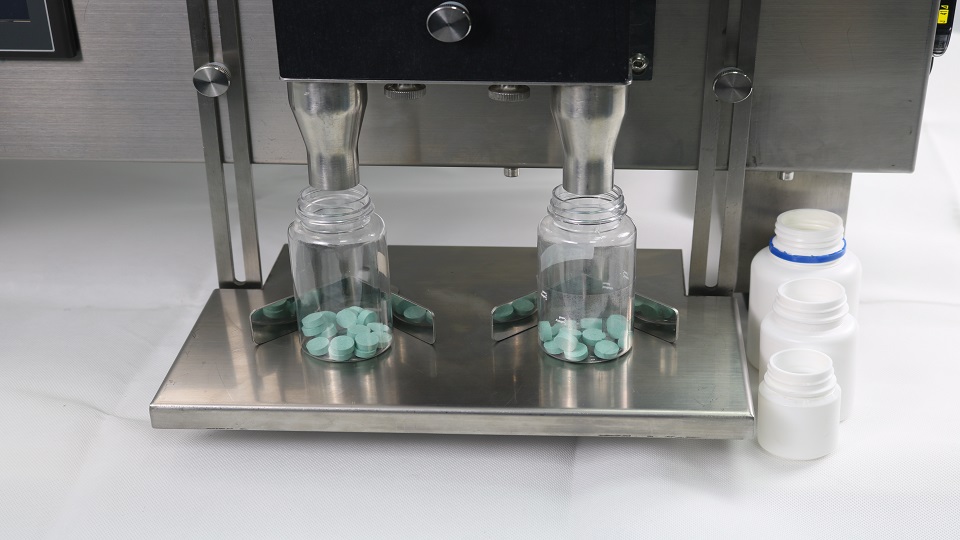
รางลำเลียงสแตนเลส 316 สำหรับเครื่องนับสินค้าแบบตั้งโต๊ะของ Rich Packing
ส่วนประกอบโครงสร้างที่ไม่สัมผัสกับผลิตภัณฑ์
โดยปกติแล้ว โครงเครื่อง ฝาครอบภายนอก ตัวยึด และโครงสร้างป้องกัน จะไม่สัมผัสกับผลิตภัณฑ์ยาโดยตรง การเลือกวัสดุจึงสามารถเน้นไปที่ความแข็งแรงเชิงกล ความเสถียรของโครงสร้าง น้ำหนัก ต้นทุน และรูปลักษณ์เป็นหลัก โดยทั่วไปแล้ว เหล็กกล้าไร้สนิม 304 และโลหะผสมอลูมิเนียมเป็นตัวเลือกที่ดี
ชิ้นส่วนสำหรับวัสดุพิเศษหรือวัสดุที่ต้องการคุณสมบัติเฉพาะ
ผลิตภัณฑ์บางชนิดสร้างความท้าทายเพิ่มเติมในการเลือกวัสดุสำหรับเครื่องจักร ผงเหนียว สูตรที่มีฤทธิ์กัดกร่อน วัสดุที่มีฤทธิ์กัดกร่อน หรือผลิตภัณฑ์ที่ไวต่อการปนเปื้อน อาจต้องใช้ส่วนผสมของวัสดุหรือการปรับสภาพพื้นผิวเฉพาะ ตัวอย่างเช่น เมื่อพูดถึงวัสดุเหนียวในการบรรจุแคปซูล จะใช้แท่งบรรจุที่เคลือบด้วย PTFE เพื่อให้มั่นใจถึงความแม่นยำในการจ่ายผง
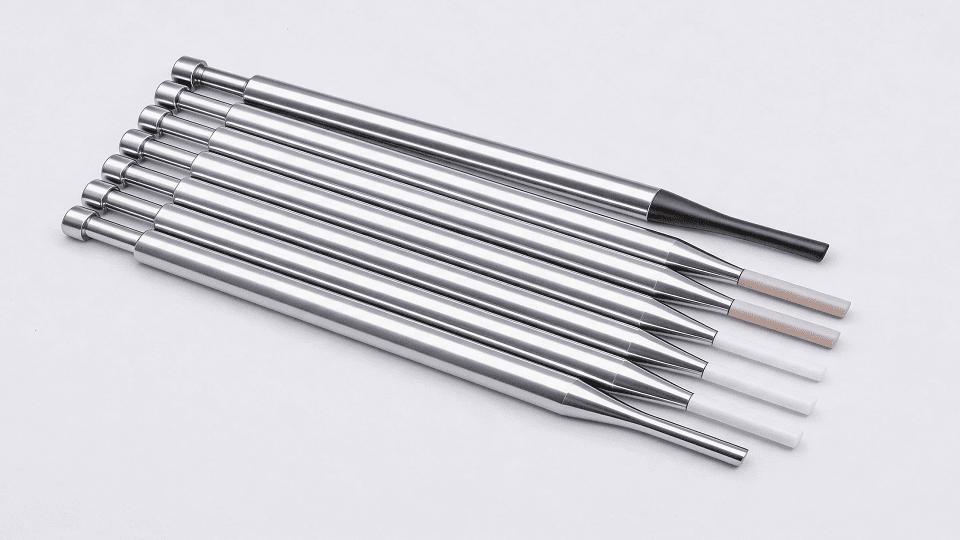
แท่งบรรจุแบบกำหนดเองของ Rich Packing สำหรับเครื่องบรรจุแคปซูล
ชิ้นส่วนเครื่องจักรแต่ละชนิดมีความต้องการวัสดุที่แตกต่างกันไป ขึ้นอยู่กับหน้าที่และการสัมผัสกับผลิตภัณฑ์ยา ต่อไปนี้คือวัสดุที่ใช้กันทั่วไป 4 ชนิด พร้อมคุณลักษณะสำคัญและการใช้งาน
เนื่องจากคุณสมบัติในการต้านทานการกัดกร่อน ความแข็งแรงเชิงกล และต้นทุน ทำให้เหล็กกล้าไร้สนิม 304 เป็นหนึ่งในเหล็กกล้าไร้สนิมที่ใช้กันอย่างแพร่หลายที่สุดเครื่องจักรเภสัชกรรมคุณสมบัติการต้านทานการกัดกร่อนทำให้เหล็กกล้าคาร์บอนธรรมดาเหมาะสมกับการใช้งานในอุปกรณ์เภสัชกรรมมากกว่า นอกจากนี้ พื้นผิวเรียบทำความสะอาดง่ายยังช่วยส่งเสริมการออกแบบอุปกรณ์ที่ถูกสุขอนามัยอีกด้วย
ในเครื่องจักรบรรจุภัณฑ์ยา เหล็กกล้าไร้สนิม 304 นิยมใช้สำหรับโครงเครื่อง ตัวเรือนภายนอก ฝาครอบป้องกัน ส่วนประกอบการลำเลียง และชิ้นส่วนที่สัมผัสกับผลิตภัณฑ์บางส่วน ซึ่งสภาวะการทำงานไม่ต้องการความทนทานต่อการกัดกร่อนเพิ่มเติมของเหล็กกล้าไร้สนิม 316/316L
อย่างไรก็ตาม เหล็กกล้าไร้สนิม 304 ไม่ควรถูกมองว่าเป็นวัสดุที่ดีที่สุดสำหรับทุกการใช้งานที่สัมผัสกับผลิตภัณฑ์โดยอัตโนมัติ วัสดุทางเภสัชกรรม สารทำความสะอาด หรือสภาพแวดล้อมบางอย่างอาจต้องการคุณสมบัติทนต่อการกัดกร่อนที่เข้มงวดกว่า ในกรณีเช่นนี้ เหล็กกล้าไร้สนิม 316/316L อาจเป็นตัวเลือกที่เหมาะสมกว่า
เหล็กกล้าไร้สนิม 316/316L มักถูกเลือกใช้เมื่อต้องการความทนทานต่อการกัดกร่อนสูง การมีโมลิบเดนัม (Mo) ในโลหะผสมทำให้แตกต่างจาก 304 โมลิบเดนัมช่วยเพิ่มความทนทานในสภาพแวดล้อมที่มีการกัดกร่อนบางประเภท ซึ่งเป็นเหตุผลหนึ่งที่เหล็กกล้าไร้สนิมซีรีส์ 316 มักถูกพิจารณาสำหรับการใช้งานที่สัมผัสกับผลิตภัณฑ์ที่มีความต้องการสูง
ความแตกต่างระหว่าง 316 และ 316L ก็มีความสำคัญเช่นกัน ตัวอักษร "L" บ่งบอกถึงปริมาณคาร์บอนที่ต่ำกว่า ซึ่งมีความสำคัญอย่างยิ่งสำหรับชิ้นส่วนที่เชื่อม เพราะปริมาณคาร์บอนที่ต่ำกว่าสามารถลดความเสี่ยงของการกัดกร่อนบางรูปแบบที่เกี่ยวข้องกับการเชื่อมได้ ด้วยเหตุนี้ เครื่องจักรอาจใช้ 316L สำหรับชิ้นส่วนที่สัมผัสกับผลิตภัณฑ์ที่ผลิตขึ้น แม้ว่าชิ้นส่วนโครงสร้างอื่นๆ ที่ไม่ได้สัมผัสกับผลิตภัณฑ์จะใช้ 304 ก็ตาม
โลหะผสมอะลูมิเนียมมีคุณค่าอย่างยิ่งในเครื่องจักรบรรจุภัณฑ์ยา เนื่องจากมีน้ำหนักเบาและมีอัตราส่วนความแข็งแรงต่อน้ำหนักที่ดี สามารถพบได้ในโครงเครื่องจักร โครงสร้างป้องกัน ชิ้นส่วนเคลื่อนที่บางส่วน และโมดูลเครื่องจักรน้ำหนักเบา
เมื่อเปรียบเทียบกับสแตนเลส อลูมิเนียมสามารถลดน้ำหนักของชิ้นส่วนเครื่องจักรได้อย่างมาก ซึ่งเป็นประโยชน์อย่างยิ่งสำหรับอุปกรณ์แบบโมดูลาร์ กลไกการเคลื่อนที่ โครงสร้างที่ปรับได้ และเครื่องจักรที่ความสะดวกในการติดตั้งหรือเคลื่อนย้ายมีความสำคัญ
อย่างไรก็ตาม ไม่ควรใช้โลหะผสมอะลูมิเนียมแทนสแตนเลสทุกกรณี โดยทั่วไปแล้ว โลหะผสมอะลูมิเนียมมีประโยชน์มากกว่าสำหรับชิ้นส่วนโครงสร้างและชิ้นส่วนน้ำหนักเบา มากกว่าที่จะใช้เป็นวัสดุหลักสำหรับพื้นผิวที่สัมผัสกับผลิตภัณฑ์
PTFE หรือโพลีเตตระฟลูออโรเอทิลีน เป็นฟลูออโรพอลิเมอร์ทางวิศวกรรมที่มีคุณสมบัติที่ทำให้เหมาะสำหรับชิ้นส่วนเฉพาะมากกว่าชิ้นส่วนโครงสร้างขนาดใหญ่ ในเครื่องบรรจุภัณฑ์ยา PTFE สามารถใช้สำหรับชิ้นส่วนที่เลื่อนได้ ชิ้นส่วนปิดผนึก ชิ้นส่วนป้องกันการเกาะติด และชิ้นส่วนที่สัมผัสกับวัสดุบางชนิด
ข้อดีที่สำคัญที่สุดของวัสดุนี้ ได้แก่ แรงเสียดทานต่ำ ความทนทานต่อสารเคมี คุณสมบัติไม่ติดแน่น และความทนทานต่ออุณหภูมิที่ดี ตัวอย่างเช่น ในกรณีที่วัสดุมีแนวโน้มที่จะติดกับพื้นผิวโลหะ ชิ้นส่วนหรือพื้นผิว PTFE อาจช่วยลดการยึดเกาะได้ แรงเสียดทานต่ำยังเป็นประโยชน์ในกลไกการนำทางและการเลื่อนที่เกิดการเคลื่อนไหวซ้ำๆ อีกด้วย
วัสดุที่มีความทนทานต่อสารเคมีดีเยี่ยมไม่ได้หมายความว่าจะเป็นตัวเลือกที่ดีที่สุดเสมอไปสำหรับงานที่มีภาระสูงหรือการสึกหรอสูงทุกประเภท ดังนั้น สำหรับเครื่องจักรในอุตสาหกรรมยา PTFE จึงควรได้รับการพิจารณาว่าเป็นวัสดุทางวิศวกรรมเฉพาะทางที่ใช้เสริมกับสแตนเลสและอลูมิเนียมมากกว่าที่จะใช้แทนที่วัสดุเหล่านั้น
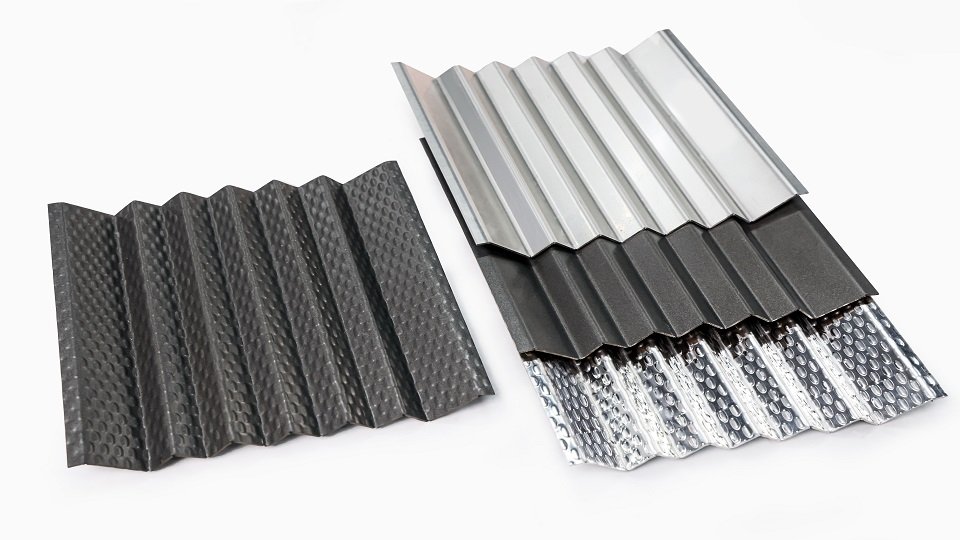
ช่องสั่นสะเทือนเคลือบ PTFE ของเครื่องนับเม็ดยา
In terms of verifying machine materials, certificates are an important part of traceability, but they are not the only way. Manufacturers can also perform spot tests or material identification tests in person. This part is to introduce several methods to test machine materials.
304 stainless steel can be verified through instrumental analysis.
XRF analysis
XRF (X-ray fluorescence) is a much more useful method for actual material identification. The basic principle is that X-rays excite atoms in the material. When the atoms return to their normal state, they emit characteristic X-rays. The instrument analyzes these signals to determine which elements are present and, within the instrument's capabilities and calibration, their concentrations.
It analyzes the alloy's elemental composition, particularly elements such as chromium and nickel, and compares the measured composition with the expected range for the target grade. This allows a manufacturer to identify whether a material is consistent with a 304-type stainless steel rather than relying on appearance or magnetism alone.
XRF is especially practical for incoming-material inspection because it is fast and can be performed with portable equipment. ASTM (American Society for Testing Material) material-identification work likewise recognizes handheld XRF as a practical tool for rapid alloy verification, while noting its limitations for certain lighter elements.
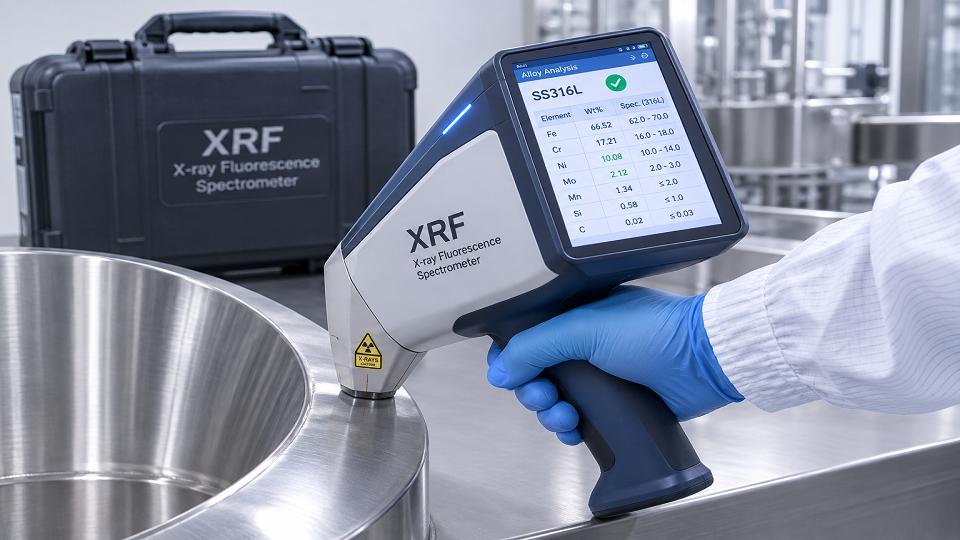
XRF analysis
OES analysis
When a more detailed analysis is required, manufacturers can use OES (Optical Emission Spectroscopy). The basic principle is different from XRF: the metal surface is excited, producing characteristic optical emission lines from the elements present.
Manufacturers can use OES spectrometer to perform the analysis. This can be useful when:
In practice, manufacturers do not necessarily need to use all methods for every 304 component. For routine verification, XRF is often the more practical instrumental test.
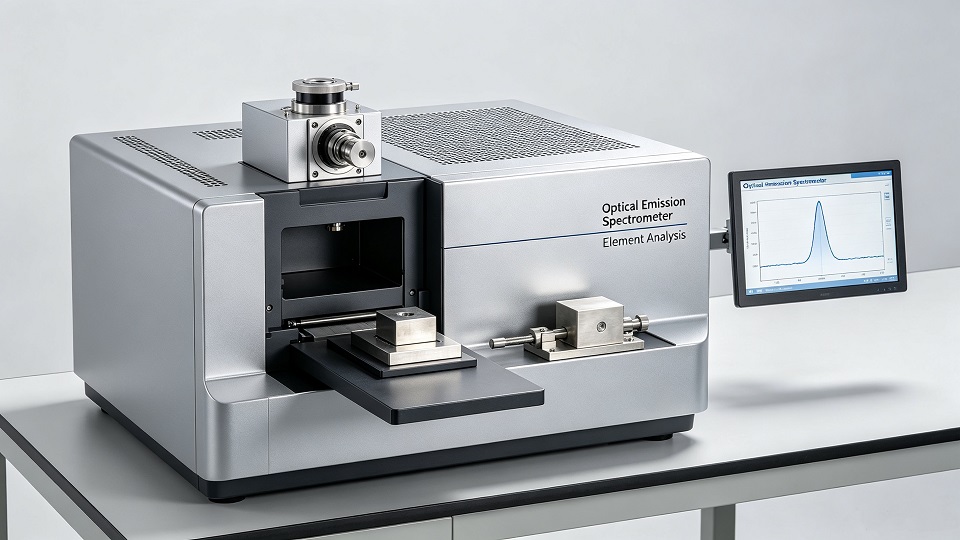
OES spectrometer
316/316L stainless steel requires particular attention because it is often selected for components where higher corrosion resistance is required. The key elemental difference between 304 and 316-series stainless steel is the presence of molybdenum (Mo) at a characteristic level in 316/316L. This makes molybdenum an important indicator when manufacturers want to distinguish 316-series stainless steel from 304.
Molybdenum Test Reagent
One practical method is a molybdenum test reagent, sometimes referred to as a 316 stainless-steel identification solution. It is based on a chemical reaction between the reagent and the machine material. Because 316/316L contains molybdenum, the reagent can produce a characteristic reaction or color change that provides a preliminary indication of whether the material contains molybdenum.
The basic process is: Prepare the surface → Apply the reagent → Observe the reaction → Compare the result → Preliminary identification
This method is attractive for manufacturers because it requires relatively little equipment. It can be useful during incoming-material inspection or for quickly checking a selected machine component.
However, the reagent test is primarily a screening method. It does not provide a complete elemental composition analysis and should not be regarded as sufficient by itself to prove the exact grade or distinguish 316 from 316L.
For critical components, a manufacturer can therefore use the reagent test as an initial check and then perform instrumental analysis if necessary.
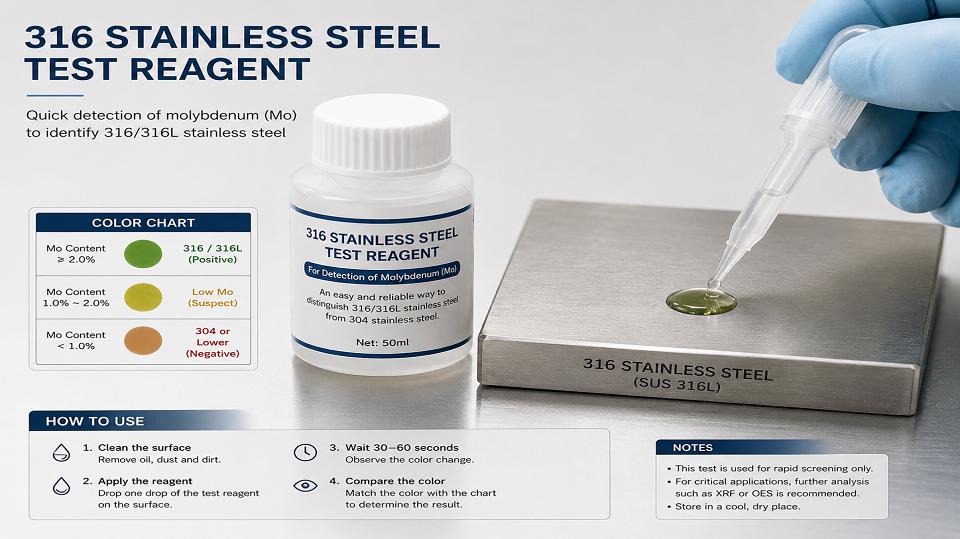
Molybdenum Test Reagent
XRF Analysis
XRF provides a more comprehensive approach to 316/316L identification. Using an XRF spectrometer, manufacturers can analyze elements such as Chromium (Cr), Nickel (Ni), and Molybdenum (Mo). The presence and relative amount of molybdenum are particularly useful when distinguishing 316-series stainless steel from 304.
Another advantage is that XRF testing is generally fast and can often be performed without cutting or destroying the component. Portable XRF instruments can therefore be useful for spot-checking materials on the factory floor.
OES Analysis
For situations where a higher level of material verification is required, manufacturers can use OES. OES can provide a more detailed elemental composition and is particularly useful when elements that are difficult to determine accurately using some portable XRF systems need to be evaluated. This can become important when a manufacturer needs to distinguish 316 from 316L, because the carbon content is one of the key differences between these two grades.
Aluminum alloy presents a different testing challenge because it is not one specific machine material. Different alloys can contain various combination of elements, such as magnesium, copper, zinc, etc.
XRF analysis
XRF can be used to analyze the elemental composition of an aluminum alloy. Depending on the alloy, the manufacturer may examine elements components by comparing the results with the expected composition of the specified alloy.
However, portable XRF systems can have limitations with lighter elements, so the instrument's capabilities and calibration need to be considered when testing aluminum alloys.
Hardness testing
Chemical composition is not the only property that can be checked. A hardness tester can provide additional information about the physical condition of the material.
The basic process is: Apply a controlled force → Create an indentation → Measure the indentation response → Obtain hardness value
Hardness testing does not identify the alloy grade by itself. Instead, it provides a physical-property check that can supplement elemental analysis.
For critical components, manufacturers may therefore combine composition testing with appropriate mechanical-property testing rather than relying on one test alone.
A practical identification method to verify PTFE is FTIR, or Fourier Transform Infrared Spectroscopy. Manufacturer can use FTIR spectrometer to perform the analysis.
The basic principle is that chemical bonds within a material absorb infrared radiation at characteristic frequencies. These can form a characteristic spectrum and then be analyzed with reference spectra. The testing process can be summarized as: PTFE sample → Infrared scanning → Characteristic spectrum → Database comparison → Material identification
FTIR is also widely applicable to other polymers including PE, PP, PVC, etc. Therefore, when a pharmaceutical packaging machine specifies PTFE for an anti-stick component, FTIR provides a practical way to verify the polymer identity rather than relying only on visual inspection or the supplier's documentation.
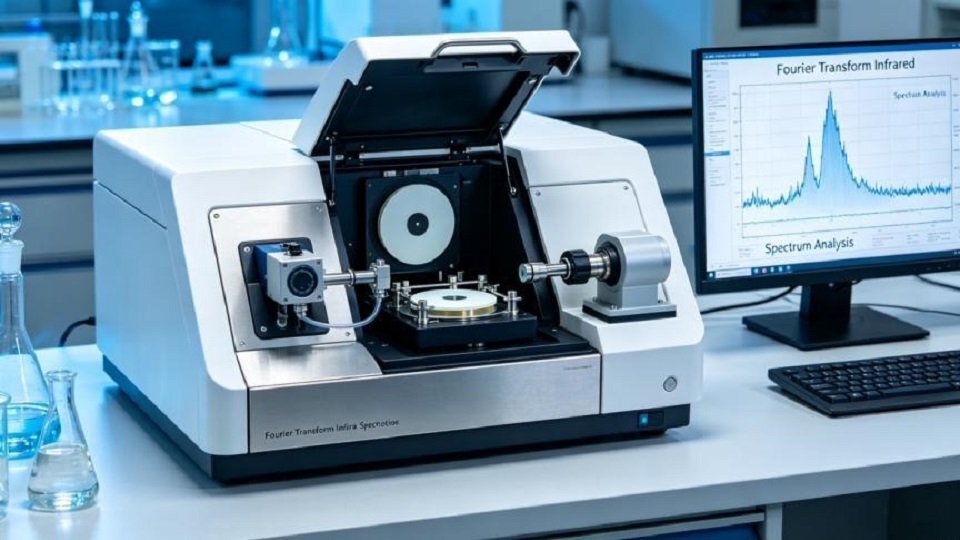
FTIR spectrometer
For a buyer evaluating a pharmaceutical packaging machine, machine material verification should go beyond asking, "Can you provide a material certificate?" The more useful approach is to understand what material is used, where it is used, why it was selected, and how the manufacturer verifies it.
Certificates are an important starting point for verifying the specified grade of machine material. However, buyers should not rely on documentation alone when evaluating critical components of a pharmaceutical packaging machine.
During fabrication, materials may be cut, welded, machined, polished, or assembled, and the buyer ultimately needs to know whether the material actually installed in the machine corresponds to the material specified in the technical documentation.
Therefore, buyers can ask suppliers to provide a material identification and verification process, particularly for product-contact components.
For example, instead of simply asking whether a machine uses stainless steel, buyers can ask the supplier to specify the material used for each critical component. A product-contact hopper may use 316L stainless steel, while the machine frame may use 304 stainless steel. This component-level information provides a much clearer understanding of the machine's material configuration.
Buyers should also ask why a particular material was selected. For example, 316L may be selected for a product-contact part because higher corrosion resistance is required, while PTFE may be selected for a guide because its low friction and non-stick properties are beneficial for product handling.
For critical materials, buyers can also request test records or sample inspection results, where appropriate. This provides additional evidence that material verification is part of the manufacturer's actual quality-control process rather than simply a statement in the machine specification.
In addition to requesting material certificates and material verification records from the supplier, buyers can also conduct on-site machine material checks during the factory inspection.
Before the factory inspection, buyers should identify which components require material verification. Priority should generally be given to product-contact parts and other critical components, rather than attempting to test every individual part of the machine.
For example, if the technical specification states that the product-contact parts of a capsule filling machine are made of 316L stainless steel, the buyer can select representative components such as the powder hopper or dosing components for spot testing through Molybdenum Test Reagent.
Buyers can record the results with the following items:
This creates a direct connection between the technical specification, machine component, and test result.
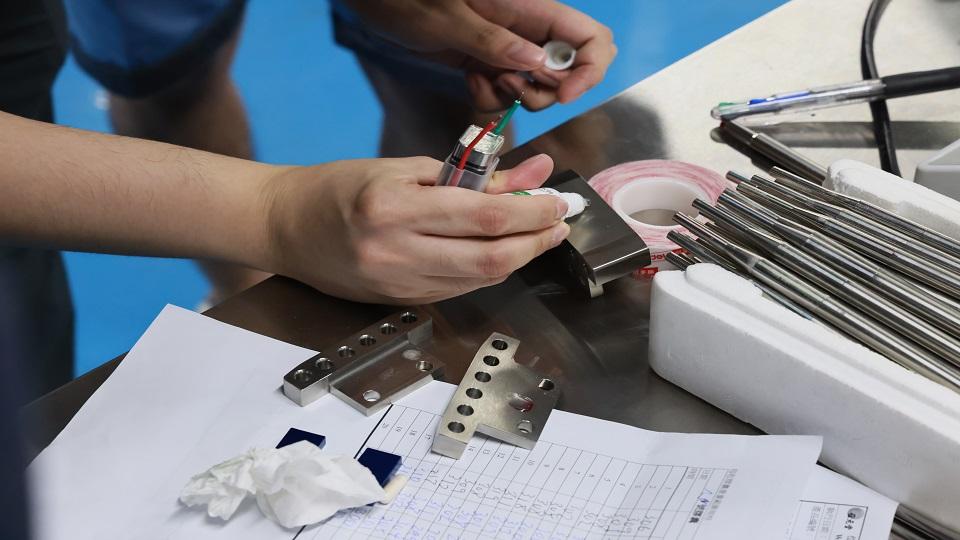
Rich Packing’s Clients is Testing 316 Stainless Steal with Reagent
Machine material selection is a critical consideration in pharmaceutical packaging. The right material can help meet applicable regulatory requirements while providing mechanical performance and product protection required for different machine components.
วัสดุแต่ละชนิดต้องการวิธีการตรวจสอบที่แตกต่างกัน ดังนั้นสำหรับผู้ซื้อ การตรวจสอบวัสดุไม่ควรหยุดอยู่แค่การตรวจสอบว่าผู้จำหน่ายสามารถจัดหาใบรับรองวัสดุได้หรือไม่ ผู้จำหน่ายที่น่าเชื่อถือควรมีกระบวนการควบคุมวัสดุที่ชัดเจน และสามารถจัดหาใบรับรองวัสดุ บันทึกการตรวจสอบ ผลการทดสอบ และเอกสารการตรวจสอบอื่นๆ ที่เกี่ยวข้องสำหรับชิ้นส่วนที่สำคัญได้ ในกรณีที่จำเป็น ผู้จำหน่ายควรสนับสนุนการทดสอบหรือตรวจสอบวัสดุ ณ สถานที่จริงระหว่างการเยี่ยมชมโรงงานและการยอมรับเครื่องจักรด้วย
โดยสรุปแล้ว ผู้จำหน่ายเครื่องจักรบรรจุภัณฑ์ยาที่ดีเยี่ยมไม่ควรเพียงแต่บอกลูกค้าว่าใช้วัสดุอะไรบ้าง แต่ควรมีหลักฐานที่ตรวจสอบย้อนกลับได้เกี่ยวกับการคัดเลือก การทดสอบ และการตรวจสอบวัสดุด้วย ซึ่งจะช่วยสร้างรากฐานที่แข็งแกร่งยิ่งขึ้นสำหรับคุณภาพของอุปกรณ์และความเชื่อมั่นด้านกฎระเบียบ
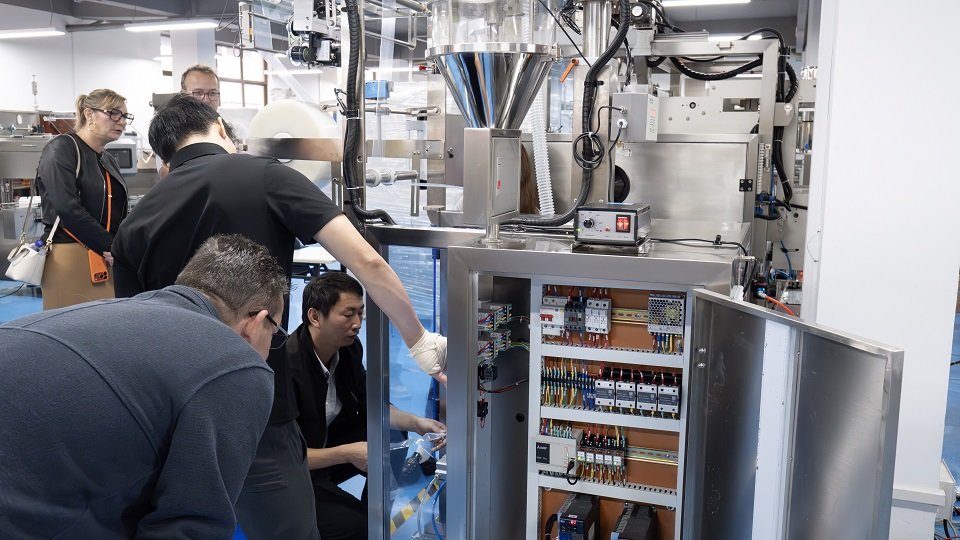
บริษัท Rich Packing ดำเนินการตรวจสอบสินค้าของลูกค้าอย่างมืออาชีพ
เหล็กกล้าไร้สนิม 316/316L มีความทนทานต่อการกัดกร่อนสูงกว่า 304 และจึงมักถูกนำมาพิจารณาสำหรับการใช้งานที่สัมผัสกับผลิตภัณฑ์ที่มีความต้องการสูง
น้ำยาตรวจวัดโมลิบเดนัมสามารถใช้ในการคัดกรองเบื้องต้นได้ ในขณะที่ XRF หรือ OES สามารถตรวจสอบวัสดุได้อย่างละเอียดมากขึ้น
XRF สามารถวิเคราะห์ธาตุต่างๆ เช่น โครเมียมและนิกเกล เพื่อระบุชนิดของวัสดุ ในขณะที่ OES สามารถให้การวิเคราะห์องค์ประกอบทางเคมีที่ละเอียดกว่าได้
FTIR (Fourier Transform Infrared Spectroscopy) สามารถระบุ PTFE ได้โดยการวิเคราะห์สเปกตรัมโมเลกุลเฉพาะของมัน
ใช่แล้ว ผู้ซื้อสามารถเลือกชิ้นส่วนที่สำคัญหรือชิ้นส่วนที่สัมผัสกับผลิตภัณฑ์เพื่อทำการทดสอบเฉพาะจุด ณ สถานที่ติดตั้ง และบันทึกรายละเอียดของชิ้นส่วน เกรดวัสดุที่ระบุ วิธีการทดสอบ และผลการทดสอบได้

29+ years in pharmaceutical machinery, covering capsule filling, tablet pressing, blister packaging, tablet and capsule counting, cartoning, GMP production, and overseas machine service.

ส่งอีเมล : manager@richpacking.cn
Building D, No. 226, Beishan Qiaotou Street, Haizhu District, Guangzhou City, Guangdong Province, China


 รองรับเครือข่าย IPv6