






 บ้าน
บ้าน ผลิตภัณฑ์
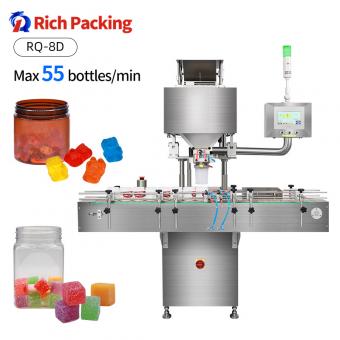
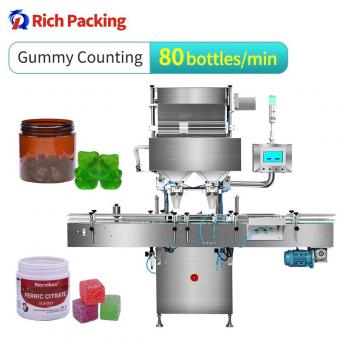
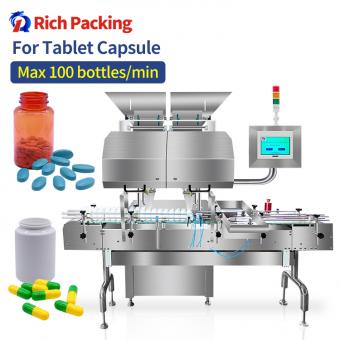
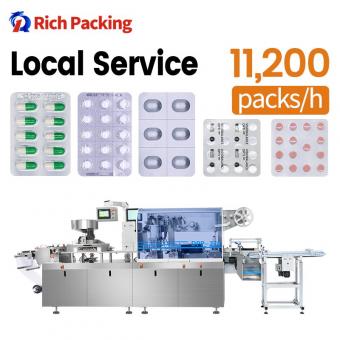
29+ years in pharmaceutical machinery, covering capsule filling, tablet pressing, blister packaging, tablet and capsule counting, cartoning, GMP production, and overseas machine service.

บรรจุภัณฑ์แบบยืดหยุ่นช่วยให้ผู้ผลิตมีวิธีที่ใช้งานได้จริงในการปกป้องผลิตภัณฑ์โดยไม่ต้องพึ่งพาขวด กระปุก หรือถาดแบบแข็ง บรรจุภัณฑ์ประเภทนี้ใช้สำหรับผงทางเภสัชกรรม เม็ด แคปซูล ผลิตภัณฑ์เสริมอาหาร กาแฟ เครื่องปรุง ลูกอมกัมมี่ และผลิตภัณฑ์อื่น ๆ อีกมากมายที่ต้องการบรรจุภัณฑ์น้ำหนักเบาและการปิดผนึกที่เชื่อถือได้
คำนี้ครอบคลุมรูปแบบถุงมากกว่าหนึ่งประเภท ซอง Sachet ซองแท่ง ซองแถบ และถุงสำเร็จรูปทั้งหมดจัดอยู่ในกลุ่มบรรจุภัณฑ์แบบยืดหยุ่น แต่ผลิตด้วยกระบวนการเครื่องจักรที่แตกต่างกัน การเลือกที่เหมาะสมขึ้นอยู่กับลักษณะของผลิตภัณฑ์ ประสิทธิภาพการกั้นสิ่งกีดขวาง ขนาดปริมาณบรรจุ การออกแบบบรรจุภัณฑ์ ปริมาณการผลิตเป้าหมาย และการจัดการหลังการผลิต การเข้าใจความแตกต่างเหล่านี้ช่วยให้ทีมผลิตหลีกเลี่ยงการเลือกบรรจุภัณฑ์ที่ดูเหมาะสมแต่ทำงานได้ไม่ดีบนสายการผลิต
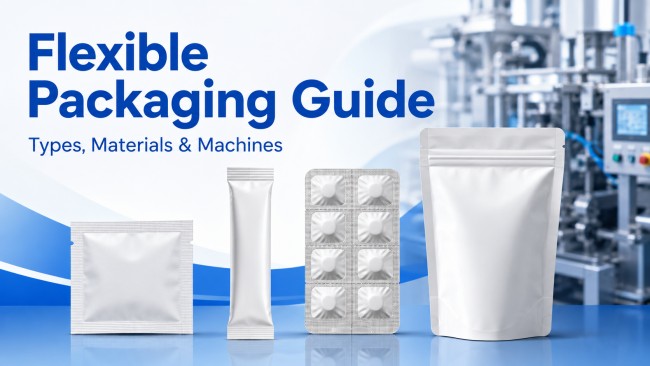
บรรจุภัณฑ์แบบยืดหยุ่นคือบรรจุภัณฑ์หรือภาชนะที่ทำจากวัสดุซึ่งสามารถเปลี่ยนรูปได้ง่ายหลังจากการบรรจุหรือการปิดผนึก โครงสร้างทั่วไปประกอบด้วยฟิล์มพลาสติก แผ่นอะลูมิเนียมฟอยล์ กระดาษ สารเคลือบ หรือวัสดุลามิเนตหลายชั้น บรรจุภัณฑ์สุดท้ายอาจอยู่ในรูปแบบซอง ซองแท่ง ถุง แถบ ห่อ หรือโครงสร้างอื่นที่ทำจากฟิล์ม
บรรจุภัณฑ์มีความยืดหยุ่น แต่หน้าที่ของมันถูกควบคุมอย่างเป็นระบบ ชั้นหนึ่งอาจให้คุณสมบัติในการพิมพ์และความแข็งแรงเชิงกล อีกชั้นหนึ่งสามารถป้องกันความชื้น ออกซิเจน หรือแสง และชั้นด้านในสามารถสร้างการปิดผนึกด้วยความร้อนที่เชื่อถือได้ โครงสร้างทั้งหมดต้องเหมาะสมกับทั้งผลิตภัณฑ์และกระบวนการบรรจุ
บรรจุภัณฑ์แบบยืดหยุ่นมักถูกเลือกเมื่อผลิตภัณฑ์ต้องการการควบคุมปริมาณ การจัดเก็บที่กะทัดรัด น้ำหนักบรรจุภัณฑ์ต่ำ หรือการใช้งานที่สะดวก เหมาะสำหรับผงแบบใช้ครั้งเดียวและผลิตภัณฑ์รูปแบบยาแข็ง ขณะที่ถุงขนาดใหญ่รองรับผงหลายส่วน เม็ดเล็ก ลูกอมกัมมี่ และผลิตภัณฑ์อาหาร
ดังนั้นบรรจุภัณฑ์แบบยืดหยุ่นสมัยใหม่จึงไม่ใช่เพียงการตัดสินใจเลือกวัสดุเท่านั้น แต่เป็นระบบที่ประสานกันของการป้อนผลิตภัณฑ์ การจ่ายปริมาณ การจัดการฟิล์มหรือถุง การปิดผนึก การพิมพ์รหัส การตรวจสอบ และการปล่อยออกจากเครื่อง วัสดุที่มีประสิทธิภาพการกั้นสูงยังอาจล้มเหลวในการผลิต หากวิธีการบรรจุไม่เสถียรหรือช่วงการปิดผนึกแคบเกินไป
|
ปัจจัยการเปรียบเทียบ |
บรรจุภัณฑ์แบบยืดหยุ่น |
บรรจุภัณฑ์แบบแข็ง |
|
โครงสร้าง |
ฟิล์ม ฟอยล์ กระดาษ และวัสดุลามิเนต |
ขวด กระปุก ถาด และภาชนะคงรูปอื่น ๆ |
|
น้ำหนักและการจัดเก็บ |
น้ำหนักเบาและประหยัดพื้นที่ |
โดยทั่วไปหนักกว่าและใช้พื้นที่มากกว่า |
|
รูปแบบทั่วไป |
ซอง ซองแท่ง ซองแถบ ถุง |
ขวด กระปุก ถัง ถาด |
|
กระบวนการผลิต |
การแปรรูปวัสดุม้วนหรือการบรรจุถุงสำเร็จรูป |
การบรรจุลงในภาชนะที่ขึ้นรูปไว้ล่วงหน้า |
ซองโดยทั่วไปเป็นบรรจุภัณฑ์ขนาดเล็กและแบน ใช้สำหรับผง เม็ดเล็ก ของเหลว เจล และผลิตภัณฑ์ขนาดตัวอย่าง รูปแบบซีลสามด้าน ซีลสี่ด้าน และซีลด้านหลังเป็นรูปแบบที่พบได้ทั่วไป ขณะที่โครงสร้างที่แน่นอนขึ้นอยู่กับเครื่องจักรและเส้นทางของฟิล์ม
ซองปริมาณการผลิตสูงส่วนใหญ่ใช้กระบวนการขึ้นรูป-บรรจุ-ปิดผนึก ฟิล์มจะถูกคลายออก จัดตำแหน่งหรือพับ บรรจุ ปิดผนึก และตัดเป็นหน่วยแยก เนื่องจากช่องเปิดสำหรับบรรจุค่อนข้างกว้าง อุปกรณ์บรรจุซองจึงสามารถรองรับลักษณะของผลิตภัณฑ์ได้หลากหลายกว่ารูปแบบซองแท่งที่แคบกว่า การบรรจุผงยังต้องใส่ใจกับความหนาแน่นรวม ความสามารถในการไหล ฝุ่น และการที่ผลิตภัณฑ์เข้าสู่บริเวณซีล
ควรเลือกเครื่องบรรจุซองโดยพิจารณาจากผลิตภัณฑ์มากกว่ารูปลักษณ์ของบรรจุภัณฑ์ สกรูป้อนเหมาะกับผงหลายประเภท ถ้วยวัดปริมาตรเหมาะกับเม็ดที่ไหลตัวได้ดี และปั๊มหรือระบบลูกสูบเหมาะสำหรับของเหลวและเจล
ซองแท่งเป็นบรรจุภัณฑ์ทรงแคบและยาว ออกแบบมาสำหรับปริมาณใช้ครั้งเดียวที่พกพาได้สะดวก รูปแบบซีลด้านหลังเป็นรูปแบบที่พบได้ทั่วไป มีหน้าที่คล้ายกับซอง แต่รูปทรงเพรียวบางต้องใช้ท่อขึ้นรูปเฉพาะ เส้นทางการบรรจุที่แคบ และการควบคุมการไหลของผลิตภัณฑ์ที่แม่นยำกว่า
ซองแท่งมักผลิตด้วยเครื่องขึ้นรูป-บรรจุ-ปิดผนึกแนวตั้ง ฟิล์มม้วนจะถูกแบ่งเป็นหลายช่อง ขึ้นรูปเป็นท่อแคบ บรรจุ ปิดผนึกตามแนวขวาง และตัด การผลิตหลายช่องทางช่วยเพิ่มกำลังการผลิตโดยสร้างหลายซองพร้อมกัน การจ่ายปริมาณที่ควบคุมด้วยเซอร์โวช่วยเพิ่มความสม่ำเสมอ ขณะที่การซีลตามแนวยาวและแนวขวางที่ควบคุมได้ช่วยรักษาความสมบูรณ์ของบรรจุภัณฑ์
ผงละเอียดหรือผงที่เกาะตัวกันอาจเกิดการติดค้าง การสะสม หรือไหลไม่สม่ำเสมอผ่านทางเดินบรรจุที่แคบ ดังนั้นการเลือกเครื่องจักรต้องพิจารณาการออกแบบสกรูป้อน ระบบช่วยป้อน การควบคุมฝุ่น ความกว้างฟิล์ม และระยะห่างของซีล เครื่องบรรจุซองแท่งหลายช่องทางของ Rich Packingเครื่องบรรจุซองแท่งหลายช่องทางรองรับการป้อนที่ปรับแต่งตามความต้องการสำหรับผง เม็ดเล็ก ของเหลว และเจล รวมถึงการจ่ายปริมาณที่ควบคุมด้วยเซอร์โวและการซีลที่ควบคุมอุณหภูมิ
บรรจุภัณฑ์แบบแถบใช้หลักสำหรับเม็ดและแคปซูล โดยทั่วไปจะวางผลิตภัณฑ์แต่ละชิ้นไว้ระหว่างแผ่นวัสดุยืดหยุ่นสองชั้นและปิดผนึกวัสดุรอบปริมาณยา กระบวนการมักเป็นแนวนอน โดยควบคุมตำแหน่งผลิตภัณฑ์ ความตึงของวัสดุ ความร้อน แรงกด และการตัดหรือการเจาะรอย
วัสดุลามิเนตที่มีฟอยล์สามารถให้ประสิทธิภาพการกั้นที่สูงและการแยกปริมาณยาแต่ละหน่วย ต้องพิจารณาขนาดผลิตภัณฑ์ รูปร่างขอบ ความเสถียรในการป้อน และความกว้างของซีล เนื่องจากวัสดุจะถูกซีลใกล้กับเม็ดหรือแคปซูลแต่ละชิ้น คู่มือบรรจุภัณฑ์แบบแถบให้การเปรียบเทียบเชิงลึกเกี่ยวกับวัสดุ การตั้งค่าเครื่องจักร และทางเลือกอื่นนอกเหนือจากบลิสเตอร์
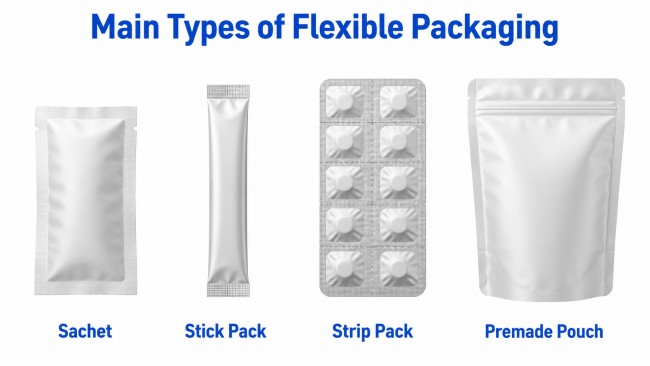
ถุงสำเร็จรูปคือบรรจุภัณฑ์แบบยืดหยุ่นที่ผลิตขึ้นก่อนเข้าสู่เครื่องบรรจุ สามารถเป็นแบบแบน แบบมีขยายข้าง แบบตั้งได้ แบบมีซิป แบบมีหัวจ่าย หรือรูปทรงเฉพาะได้ โครงสร้างของถุงเหล่านี้ช่วยให้ผู้ผลิตมีอิสระในการออกแบบมากกว่ารูปแบบวัสดุม้วนส่วนใหญ่
เครื่องจักรไม่ได้ขึ้นรูปถุง แต่จะป้อนซองสำเร็จรูป เปิดซอง ยืนยันการจัดวางที่ถูกต้อง เติมผลิตภัณฑ์ ปิดซิปเมื่อจำเป็น ซีลความร้อนที่ด้านบน และปล่อยหรือคัดทิ้งบรรจุภัณฑ์ที่เสร็จแล้ว การเปิดซองอย่างน่าเชื่อถือมีความสำคัญอย่างยิ่ง เนื่องจากถุงที่เปิดไม่เต็มที่หรือมีรอยย่นอาจทำให้เติมสินค้าไม่เข้า เกิดการปนเปื้อนบริเวณซีล หรือมีรูปลักษณ์ที่ไม่ดี
A เครื่องบรรจุซองสำเร็จรูปสามารถใช้สถานีหลายชุดสำหรับป้อนถุง เปิด เติม ซีล ตรวจสอบ และคัดทิ้ง การควบคุมแรงดันซีลช่วยให้การปิดผนึกสม่ำเสมอ ขณะที่ระบบเติมสามารถปรับให้เหมาะกับผง เม็ดเล็ก เยลลี่ ลูกอม ผลิตภัณฑ์เสริมอาหาร และผลิตภัณฑ์อาหาร
|
รูปแบบ |
วิธีการผลิต |
ลักษณะสำคัญ |
ผลิตภัณฑ์ทั่วไป |
|
ซองเล็ก |
การขึ้นรูป-บรรจุ-ซีลจากม้วนฟิล์ม |
บรรจุภัณฑ์แบบแบนสำหรับปริมาณใช้ครั้งเดียวที่มีช่องเติมค่อนข้างกว้าง |
ผง เม็ดเล็ก ของเหลว เจล |
|
ซองแท่ง |
การขึ้นรูป-บรรจุ-ซีลแนวตั้งแบบหลายช่อง |
รูปแบบใช้ครั้งเดียวที่แคบและยาว |
ผลิตภัณฑ์เสริมอาหาร กาแฟ อิเล็กโทรไลต์ ผงยา |
|
ซองแถบ |
การซีลแนวนอนด้วยฟิล์มสองชั้น |
รูปแบบยาชนิดแข็งที่ปิดล้อมระหว่างชั้นวัสดุยืดหยุ่น |
เม็ดยาและแคปซูล |
|
ซองสำเร็จรูป |
การป้อนซองสำเร็จรูป เปิด เติม และซีล |
มีความยืดหยุ่นมากขึ้นสำหรับส่วนขยายข้างซอง ซิป ปากเท และรูปแบบตั้งได้ |
ผง เม็ดเล็ก เยลลี่ ขนมขบเคี้ยว ผลิตภัณฑ์เสริมอาหาร |
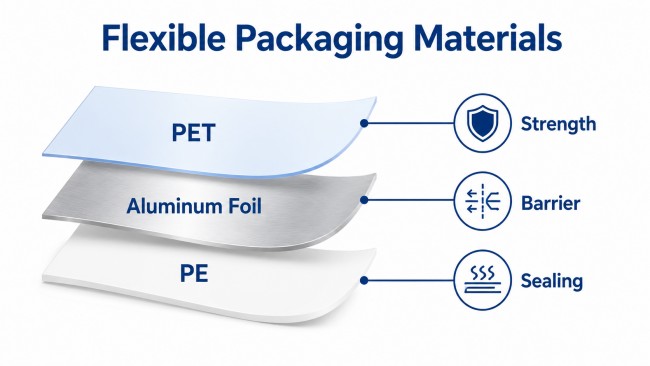
ประสิทธิภาพของบรรจุภัณฑ์ยืดหยุ่นขึ้นอยู่กับการทำงานร่วมกันของชั้นวัสดุ PET มักใช้เป็นชั้นโครงสร้างและพิมพ์ด้านนอก เนื่องจากให้ความแข็งแรง ความคงรูป ความใส และคุณภาพพื้นผิว PE นิยมใช้ด้านในเพราะซีลได้ดีและมีคุณสมบัติเหมาะสำหรับการสัมผัสผลิตภัณฑ์ PP สามารถให้ความแข็ง ความทนความร้อน หรือคุณสมบัติการซีลได้ ขึ้นอยู่กับรูปแบบและตำแหน่งในแผ่นลามิเนต
ฟอยล์อะลูมิเนียมให้การป้องกันระดับสูงต่อแสง ความชื้น และก๊าซ มีคุณค่าสำหรับผงยา เม็ดยา แคปซูล โปรไบโอติก และผลิตภัณฑ์อื่นที่สูญเสียคุณภาพเมื่อสัมผัสกับสภาพแวดล้อม ฟอยล์ที่บางมากอาจมีรูเข็ม ดังนั้นความหนาฟอยล์ คุณภาพการแปรรูป การออกแบบแผ่นลามิเนต และประสิทธิภาพการซีลจึงมีความสำคัญมากกว่าคำว่า "ฟอยล์" เพียงอย่างเดียว
โครงสร้างเช่น PET/AL/PE แสดงแนวทางแบบหลายชั้น: PET รองรับการพิมพ์และความแข็งแรง อะลูมิเนียมให้การป้องกันสิ่งกีดขวาง และ PE สร้างซีลด้านใน นอกจากนี้ยังใช้ฟิล์มใสกั้นสิ่งกีดขวางสูงเมื่อจำเป็นต้องมองเห็นผลิตภัณฑ์ การตรวจจับแบบไม่ใช้โลหะ หรือข้อกำหนดด้านกระบวนการอื่นทำให้ฟอยล์ไม่เหมาะสม
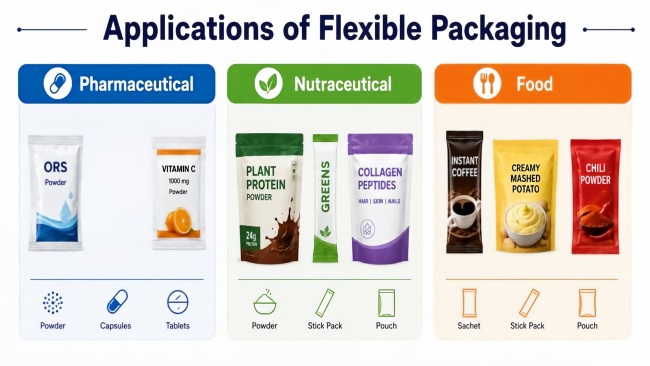
ในการผลิตยา ซองเล็กใช้สำหรับบรรจุผงและเม็ดเล็ก ขณะที่ซองแถบช่วยปกป้องเม็ดยาและแคปซูลในรูปแบบขนาดรับประทานเฉพาะหน่วย บรรจุภัณฑ์ยืดหยุ่นที่ใช้เป็นบรรจุภัณฑ์หลักต้องเข้ากันได้กับผลิตภัณฑ์และรักษาการป้องกันที่ต้องการตลอดการเก็บรักษาและการกระจายสินค้า ผู้ผลิตผลิตภัณฑ์เสริมอาหารใช้ซองแท่งและซองเล็กสำหรับโปรไบโอติก อิเล็กโทรไลต์ ผงวิตามิน และผลิตภัณฑ์โปรตีน ขณะที่ซองสำเร็จรูปเหมาะกับผงหลายหน่วยบริโภค เยลลี่ และเม็ดเล็ก ผู้ผลิตอาหารใช้รูปแบบเดียวกันสำหรับกาแฟ น้ำตาล เครื่องปรุงรส ซอส ขนมขบเคี้ยว และส่วนผสมแบบผง
เครื่องจักรบรรจุภัณฑ์ยืดหยุ่นใช้แนวทางกลไกที่แตกต่างกัน แต่สายการผลิตที่ประสบความสำเร็จทุกระบบควบคุมองค์ประกอบสำคัญสี่ประการ ได้แก่ การส่งผลิตภัณฑ์ การจัดวางบรรจุภัณฑ์ การเติมที่แม่นยำ และการซีลที่ทำซ้ำได้
ระบบซองเล็กและซองแท่งจากม้วนฟิล์มเริ่มต้นด้วยการคลายฟิล์มและควบคุมแรงตึง เครื่องหมายกำหนดตำแหน่งช่วยให้กราฟิกที่พิมพ์อยู่ตรงแนว เครื่องจักรขึ้นรูปฟิล์ม ส่งผลิตภัณฑ์ผ่านระบบจ่ายที่เหมาะสม สร้างซีลตามแนวยาวและแนวขวาง และตัดแผ่นฟิล์ม อุปกรณ์ซองแท่งหลายช่องทำซ้ำกระบวนการเหล่านี้ในหลายช่อง เพิ่มกำลังการผลิตพร้อมเพิ่มความสำคัญของการจ่ายปริมาณที่เท่ากันและการซีลสม่ำเสมอตลอดความกว้างของเครื่องจักร
เครื่องบรรจุซองแถบควบคุมฟิล์มสองชั้นแทนการขึ้นรูปถุง เม็ดยาหรือแคปซูลถูกวางตามระยะคงที่ ปิดด้วยฟิล์มชั้นที่สอง ซีลรอบแต่ละหน่วยยา จากนั้นตัดหรือเจาะรู การป้อนที่แม่นยำและการติดตามแนวฟิล์มมีความสำคัญ เนื่องจากผลิตภัณฑ์ที่วางผิดตำแหน่งอาจเข้าไปอยู่ในบริเวณซีล
เครื่องซองสำเร็จรูปใช้สถานีแบบกำหนดจังหวะแทนส่วนขึ้นรูปฟิล์ม สายการผลิตจะจัดวางซองสำเร็จรูป เปิด เติม และใช้ความร้อนกับแรงดันที่ควบคุมในการซีลด้านบน เซ็นเซอร์สามารถยืนยันการมีอยู่ของซอง การเปิดที่ถูกต้อง การเติมเสร็จสมบูรณ์ และคุณภาพซีลก่อนคัดทิ้งหน่วยที่มีข้อบกพร่อง
สำหรับการบรรจุผง ความแม่นยำของการจ่ายขึ้นอยู่กับความหนาแน่นรวม ขนาดอนุภาค ความสามารถในการไหล ความชื้น และฝุ่น เครื่องบรรจุผงควรทดสอบด้วยผลิตภัณฑ์จริงและฟิล์มเป้าหมาย ไม่ควรเลือกจากข้อมูลความเร็วเพียงอย่างเดียว
ที่ Rich Packing ระบบซองแท่งและซองสำเร็จรูปสามารถกำหนดค่าให้เหมาะกับวัสดุที่เติม รูปแบบซีลที่ต้องการ ระดับระบบอัตโนมัติ และอุปกรณ์ปลายทาง เมื่อต้องนำบรรจุภัณฑ์ยืดหยุ่นเข้าสู่การพิมพ์รหัส การคัดแยก การบรรจุกล่อง หรือการบรรจุลัง ควรประเมินเครื่องจักรเป็นส่วนหนึ่งของ สายการผลิตบรรจุภัณฑ์ยาแทนที่จะเป็นเพียงสถานีแยกเดี่ยว
เริ่มต้นจากผลิตภัณฑ์ เม็ดเล็กที่ไหลอิสระ ผงที่จับตัว ของเหลว เจล เม็ดยา แคปซูล และเยลลี่ ต้องการวิธีป้อนและเติมที่แตกต่างกัน จากนั้นกำหนดขนาดบรรจุและประสบการณ์การใช้งาน ซองเล็กให้รูปแบบใช้ครั้งเดียวที่กว้าง ซองแท่งเน้นการพกพา ซองแถบแยกหน่วยยาชนิดแข็ง และซองสำเร็จรูปรองรับปริมาณมากขึ้นพร้อมคุณสมบัติของถุงที่ซับซ้อนกว่า
ประสิทธิภาพของชั้นกั้นเป็นปัจจัยถัดมา โปรไบโอติกหรือเม็ดยาที่ไวต่อความชื้นต้องใช้ลามิเนตที่แตกต่างจากผงอาหารที่มีความคงตัว วัสดุต้องสามารถซีลได้ภายในช่วงการทำงานที่เหมาะสม ความแข็งแรงของรอยซีลมีความสำคัญ เพราะบรรจุภัณฑ์ต้องปิดสนิทระหว่างการขนย้ายและยังคงเปิดได้ตามวิธีที่ต้องการ
เป้าหมายการผลิตควรอิงจากผลผลิตที่ทำได้อย่างต่อเนื่อง ไม่ใช่เพียงความเร็วสูงสุดของเครื่องเท่านั้น เวลาเปลี่ยนงาน การเข้าถึงเพื่อทำความสะอาด การสูญเสียวัสดุฟิล์ม สมดุลของช่องทาง การเปิดซองอย่างน่าเชื่อถือ การพิมพ์รหัส การตรวจสอบ และการถ่ายโอนในกระบวนการถัดไป ล้วนส่งผลต่อประสิทธิภาพจริง เครื่องจักรที่เร็วแต่ทำให้เกิดการหยุดชะงักซ้ำ ๆ หรือเกิดการปฏิเสธจากรอยซีล จะให้ผลผลิตที่ใช้งานได้ต่ำกว่าสายการผลิตที่เสถียรซึ่งทำงานต่ำกว่าค่าสูงสุดทางทฤษฎี
สุดท้าย ควรทดสอบการทำงานร่วมกันของผลิตภัณฑ์ วัสดุ และเครื่องจักรก่อนการอนุมัติ ตัวอย่างควรได้รับการตรวจสอบความแปรปรวนของการบรรจุ การปนเปื้อนบริเวณซีล การรั่วซึม การจัดแนวงานพิมพ์ ความง่ายในการเปิด และความคงตัวหลังการจัดเก็บ การตรวจสอบเชิงปฏิบัตินี้มีประโยชน์มากกว่าการเลือกบรรจุภัณฑ์จากรูปลักษณ์หรือราคาเพียงอย่างเดียว
ประเภททั่วไปของบรรจุภัณฑ์แบบยืดหยุ่น ได้แก่ ซอง ถุงแท่ง ซองแถบ ถุงสำเร็จรูป ถุงห่อ วัสดุปิดฝา และโครงสร้างอื่น ๆ ที่ทำจากฟิล์มหรือฟอยล์ สำหรับอุปกรณ์บรรจุภัณฑ์ทางเภสัชกรรมและผลิตภัณฑ์ผง ซอง ถุงแท่ง ซองแถบ และถุงสำเร็จรูปเป็นรูปแบบที่เกี่ยวข้องเป็นพิเศษสี่ประเภท
ใช่ ถุงสำเร็จรูปทำจากโครงสร้างฟิล์มยืดหยุ่น ฟอยล์ กระดาษ หรือลามิเนต และจะเปลี่ยนรูปตามสิ่งที่บรรจุอยู่ คำว่า "สำเร็จรูป" อธิบายวิธีที่ถุงเข้าสู่เครื่องบรรจุ ไม่ได้บ่งบอกว่าบรรจุภัณฑ์นั้นมีความยืดหยุ่นหรือไม่
ซองโดยทั่วไปจะกว้างและแบนกว่า ขณะที่ถุงแท่งจะแคบและยาว ทั้งสองรูปแบบมักใช้การผลิตแบบม้วนฟิล์ม-ขึ้นรูป-บรรจุ-ซีล แต่ถุงแท่งต้องการเส้นทางการขึ้นรูปและการบรรจุที่แคบกว่า และต้องพึ่งพาการไหลของผงกับการควบคุมหลายช่องทางมากกว่า
ไม่เหมือนกัน บรรจุภัณฑ์แบบแถบโดยทั่วไปจะห่อหุ้มเม็ดยาหรือแคปซูลไว้ระหว่างแผ่นวัสดุยืดหยุ่นสองชั้น ส่วนบรรจุภัณฑ์แบบแผงกดจะวางผลิตภัณฑ์ไว้ในช่องที่ขึ้นรูปแล้วปิดด้วยวัสดุปิดฝา โครงสร้างบรรจุภัณฑ์ กระบวนการของเครื่องจักร รูปลักษณ์ และวิธีการเปิดแตกต่างกัน
ควรทดสอบผลิตภัณฑ์จริงและวัสดุบรรจุภัณฑ์สำหรับความแม่นยำในการจ่าย การไหลของผลิตภัณฑ์ การปนเปื้อนบริเวณซีล ความแข็งแรงของซีล การรั่วซึม การจัดตำแหน่ง ความสามารถในการเปิด และความเร็วสายการผลิตที่ทำได้อย่างต่อเนื่อง ควรทบทวนการเปลี่ยนงาน การทำความสะอาด การตรวจสอบ และการเชื่อมต่อกับกระบวนการถัดไปด้วย
ข้อสรุปสำคัญ
บรรจุภัณฑ์แบบยืดหยุ่นทำงานได้ดีที่สุดเมื่อพิจารณารูปแบบ วัสดุ ผลิตภัณฑ์ และเครื่องจักรเป็นระบบเดียวกัน ซอง ถุงแท่ง ซองแถบ และถุงสำเร็จรูปต่างตอบโจทย์ความต้องการด้านการผลิตและตลาดที่แตกต่างกัน การเลือกที่เหมาะสมทางเทคนิคช่วยปกป้องผลิตภัณฑ์ ทำให้การทำงานมีความสม่ำเสมอ และยังคงความยืดหยุ่นเพียงพอสำหรับรูปแบบและการเปลี่ยนแปลงกำลังการผลิตในอนาคต
1. สมาคมบรรจุภัณฑ์แบบยืดหยุ่น - ภาพรวมอุตสาหกรรม
2. U.S. FDA - ระบบภาชนะบรรจุและการปิดผนึกสำหรับการบรรจุยาสำหรับมนุษย์และผลิตภัณฑ์ชีววัตถุ
3. ASTM International - ASTM F88/F88M-23, ความแข็งแรงของซีลสำหรับวัสดุกั้นแบบยืดหยุ่น

29+ years in pharmaceutical machinery, covering capsule filling, tablet pressing, blister packaging, tablet and capsule counting, cartoning, GMP production, and overseas machine service.

ส่งอีเมล : manager@richpacking.cn
Building D, No. 226, Beishan Qiaotou Street, Haizhu District, Guangzhou City, Guangdong Province, China


 รองรับเครือข่าย IPv6