






 บ้าน
บ้าน ผลิตภัณฑ์
การแนะนำ
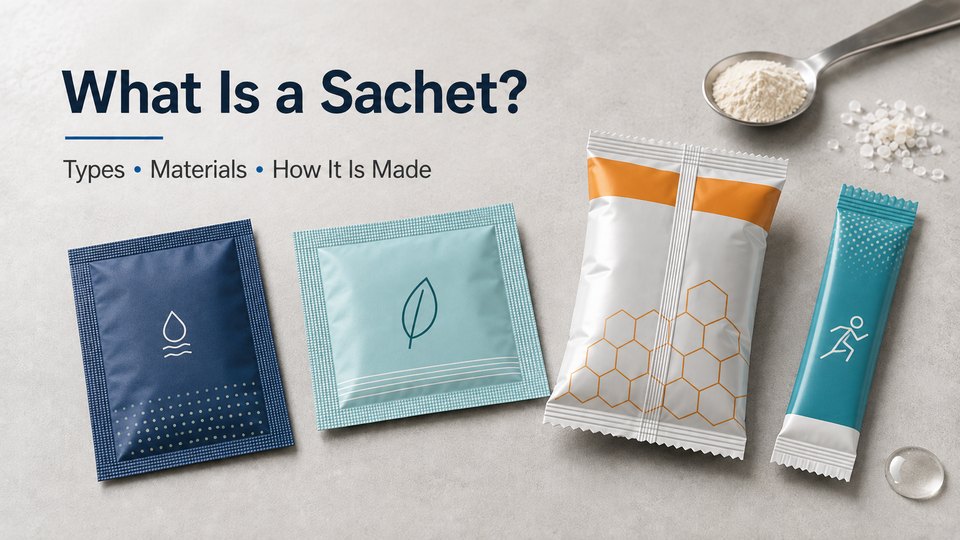
ซองบรรจุภัณฑ์ คือ บรรจุภัณฑ์ขนาดเล็กที่ปิดสนิทและยืดหยุ่นได้ ใช้สำหรับบรรจุผลิตภัณฑ์ในปริมาณที่กำหนดไว้ ตัวอย่างที่พบได้ทั่วไป ได้แก่ ซองน้ำตาล กาแฟสำเร็จรูป เครื่องปรุงรส ตัวอย่างแชมพู ซอส และผงเสริมอาหาร
บรรจุภัณฑ์แบบซองสามารถใช้กับผง เม็ด ของเหลว เจล ครีม และผลิตภัณฑ์ที่เป็นของเหลวอื่นๆ ได้ เมื่อระบบการบรรจุและวัสดุบรรจุภัณฑ์เหมาะสมกับผลิตภัณฑ์ ทำให้รูปแบบนี้มีประโยชน์ในอุตสาหกรรมอาหาร ผลิตภัณฑ์เสริมอาหาร ยา เครื่องสำอาง ผลิตภัณฑ์ดูแลส่วนบุคคล และผลิตภัณฑ์ใช้ในครัวเรือน
เบื้องหลังบรรจุภัณฑ์ขนาดเล็กนั้นคือกระบวนการบรรจุภัณฑ์ที่สมบูรณ์แบบ: พฤติกรรมของผลิตภัณฑ์ส่งผลต่อวิธีการบรรจุ ความต้องการในการปกป้องมีอิทธิพลต่อโครงสร้างของฟิล์ม และการออกแบบซองกำหนดวิธีการขึ้นรูปและปิดผนึกบรรจุภัณฑ์
คู่มือนี้อธิบายว่าซองคืออะไร ประเภทหลักของบรรจุภัณฑ์ซอง สิ่งที่สามารถบรรจุได้ในซอง วัสดุที่ใช้ และวิธีการขึ้นรูป บรรจุ ปิดผนึก และตัดซองในเชิงพาณิชย์
1. ซองคืออะไร?
ซองบรรจุภัณฑ์ขนาดเล็ก ยืดหยุ่นได้ บรรจุผลิตภัณฑ์ในปริมาณที่กำหนดหรือจำกัดไว้ภายในวัสดุบรรจุภัณฑ์ที่ปิดผนึก มักใช้เพื่อความสะดวกในการพกพา การควบคุมปริมาณ การแจกตัวอย่าง หรือใช้ครั้งเดียว
คำว่า "ซองบรรจุภัณฑ์" หมายถึงบรรจุภัณฑ์สำเร็จรูป ไม่ใช่วิธีการผลิตแบบใดแบบหนึ่ง โครงสร้างทั่วไป ได้แก่ ซองปิดผนึกสามด้าน ซองปิดผนึกสี่ด้าน และซองปิดผนึกด้านหลัง ในขณะที่รูปทรงสำเร็จรูปอาจเป็นสี่เหลี่ยมผืนผ้าหรือรูปทรงพิเศษต่างๆ
ซองบรรจุภัณฑ์มีลักษณะอย่างไร?
ซองบรรจุภัณฑ์ส่วนใหญ่ทำจากวัสดุบรรจุภัณฑ์แบบยืดหยุ่นที่จัดจำหน่ายในรูปแบบฟิล์มม้วน และประกอบด้วยองค์ประกอบพื้นฐานสามอย่าง:
- ตัวบรรจุภัณฑ์ ซึ่งห่อหุ้มและยึดผลิตภัณฑ์ไว้
- บริเวณที่ปิดผนึก ซึ่งปิดบรรจุภัณฑ์และช่วยปกป้องสิ่งของภายใน
- ลักษณะการเปิดบรรจุภัณฑ์ เช่น รอยฉีกหรือขอบที่ฉีกง่าย เมื่อจำเป็นตามการออกแบบบรรจุภัณฑ์
วัสดุบรรจุภัณฑ์อาจเป็นฟิล์มธรรมดาหรือวัสดุเคลือบหลายชั้นที่รวมฟังก์ชันหลายอย่างไว้ด้วยกัน
ชั้นวัสดุที่แตกต่างกันสามารถให้คุณสมบัติในการพิมพ์ ความแข็งแรงเชิงกล การป้องกันความชื้นหรือออกซิเจน การป้องกันแสง และประสิทธิภาพในการปิดผนึกด้วยความร้อนได้
โครงสร้างที่เหมาะสมนั้นขึ้นอยู่กับผลิตภัณฑ์ เครื่องปรุงรสแห้ง ผงเสริมอาหารที่ไวต่อความชื้น และซอสเหลว มีความต้องการที่แตกต่างกันในด้านการป้องกันการซึมผ่าน ประสิทธิภาพการปิดผนึก และความแข็งแรงของบรรจุภัณฑ์
ซอง vs. ถุง: ต่างกันอย่างไร?
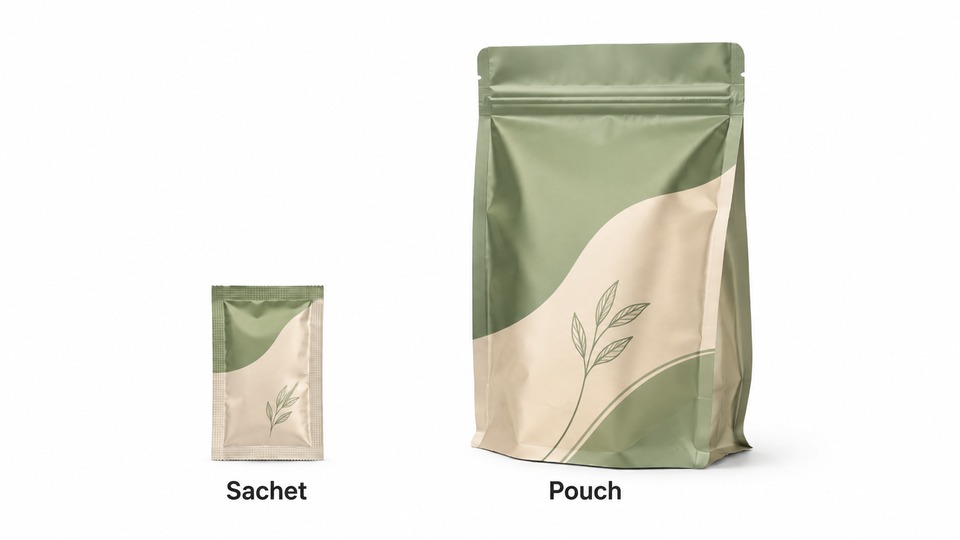
ซอง (sachet) เป็นบรรจุภัณฑ์แบบยืดหยุ่นชนิดหนึ่ง ในขณะที่ถุง (pouch) เป็นคำที่ใช้เรียกบรรจุภัณฑ์ในความหมายกว้างกว่า
โดยทั่วไปในการใช้งานด้านบรรจุภัณฑ์ ซองมักหมายถึงบรรจุภัณฑ์ขนาดเล็กที่มีปริมาณที่กำหนดไว้หรือจำกัด ในขณะที่ถุงบรรจุภัณฑ์นั้นครอบคลุมขนาดและรูปแบบที่หลากหลายกว่า รวมถึงถุงตั้งได้ ถุงซิป และถุงมีจุก
ไม่มีขนาดมาตรฐานที่กำหนดว่าซองเล็กหรือถุงบรรจุสินค้าจะต้องมีขนาดเท่าใด ดังนั้นคำศัพท์ทั้งสองจึงอาจมีความหมายทับซ้อนกันในอุตสาหกรรมต่างๆ
ซองขนาดเล็กจำนวนมากถูกขึ้นรูปจากฟิล์มม้วนบนเครื่องเครื่องบรรจุซองในขณะที่ขนาดใหญ่หรือซับซ้อนกว่าถุงบรรจุภัณฑ์มักถูกจัดส่งแบบสำเร็จรูปจากนั้นจึงเปิด บรรจุ และปิดผนึกทีละชิ้น
2. บรรจุภัณฑ์แบบซองมีประเภทหลักอะไรบ้าง?
วิธีที่ชัดเจนที่สุดในการจำแนกประเภทบรรจุภัณฑ์แบบซองคือ พิจารณาจากโครงสร้างของซีลก่อน จากนั้นจึงแยกย่อยตามรูปทรงและคุณลักษณะพิเศษ
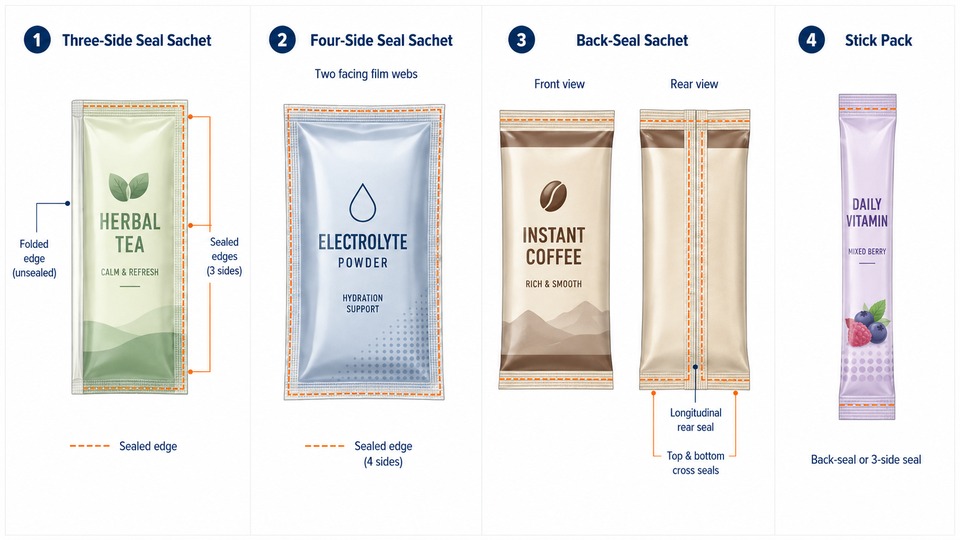
ซองปิดผนึกสามด้าน
ซองปิดผนึกสามด้านโดยทั่วไปจะทำจากแผ่นฟิล์มหนึ่งแผ่นที่พับเพื่อให้ขอบด้านหนึ่งปิดสนิท ส่วนอีกสามขอบจะปิดผนึกด้วยความร้อน
ผลลัพธ์ที่ได้คือบรรจุภัณฑ์ที่แบนและกะทัดรัด ซึ่งใช้กันอย่างแพร่หลายสำหรับผง เม็ด ของเหลว ตัวอย่าง และส่วนเล็กๆ อื่นๆ
ซองปิดผนึกสี่ด้าน
ซองปิดผนึกสี่ด้านโดยทั่วไปทำจากแผ่นฟิล์มสองแผ่นวางประกบกันและปิดผนึกรอบขอบทั้งสี่ด้าน แผ่นฟิล์มทั้งสองอาจมาจากม้วนแยกกันหรือจากม้วนเดียวที่ตัดแบ่งเป็นสองแผ่น
โดยทั่วไปมักใช้กับผง เม็ด ของเหลว ครีม และเจล
ซองปิดผนึกด้านหลัง
ซองปิดผนึกด้านหลังผลิตโดยการห่อฟิล์มรอบส่วนขึ้นรูป ทำให้เกิดการปิดผนึกด้านหลังตามแนวยาว และเพิ่มการปิดผนึกขวางด้านบนและด้านล่าง
ซองบรรจุยาแบบแท่ง: รูปแบบแคบสำหรับรับประทานครั้งเดียว
บรรจุภัณฑ์แบบแท่งเป็นบรรจุภัณฑ์ที่มีลักษณะแคบและยาว ยืดหยุ่นได้ ขึ้นอยู่กับการออกแบบบรรจุภัณฑ์ อาจใช้โครงสร้างการปิดผนึกด้านหลังหรือปิดผนึกสามด้าน บรรจุภัณฑ์แบบแท่งใช้กันอย่างแพร่หลายสำหรับผงเครื่องดื่ม อาหารเสริม น้ำตาล เม็ด และของเหลวบางชนิด
| รูปแบบ / โครงสร้างตราประทับ | รูปทรงทั่วไป | ผลิตภัณฑ์ทั่วไป | ลักษณะสำคัญ |
|---|---|---|---|
|
ซีลสามด้าน |
แบน สี่เหลี่ยมจัตุรัส หรือสี่เหลี่ยมผืนผ้า |
ผง เม็ด ของเหลว |
ขอบพับหนึ่งด้านและขอบปิดผนึกสามด้าน |
|
ซีลสี่ด้าน |
แบน สี่เหลี่ยมจัตุรัส หรือสี่เหลี่ยมผืนผ้า |
ผง, ของเหลว, ครีม, เจล |
มีแผ่นฟิล์มสองชั้นปิดผนึกรอบทั้งสี่ด้าน |
|
ซีลด้านหลัง |
ทรงสี่เหลี่ยมผืนผ้าหรือทรงหมอน |
ผง เม็ด ของเหลว |
ซีลแนวยาวด้านหลัง พร้อมซีลขวางด้านบนและด้านล่าง |
|
บรรจุภัณฑ์แบบแท่ง (รูปแบบ) |
แคบและยาว |
ผง เม็ด ของเหลว |
รูปทรงแคบยาว; โครงสร้างซีลแตกต่างกันไปตามการออกแบบเครื่องบรรจุซองแบบแท่ง |
รูปทรงซองและดีไซน์พิเศษ
ซองแบบปิดผนึกสามด้าน สี่ด้าน และแบบปิดผนึกด้านหลัง สามารถใช้รูปทรงหรือคุณสมบัติอำนวยความสะดวกที่แตกต่างกันได้เช่นกัน
ตัวอย่างที่พบได้ทั่วไป ได้แก่:
- ซองสี่เหลี่ยมผืนผ้า รูปทรงที่คุ้นเคยและเรียบง่ายที่สุด
- ซองบรรจุภัณฑ์รูปทรงต่างๆ ทั้งแบบโค้งมน กลม หรือรูปทรงที่กำหนดเอง เพื่อการนำเสนอผลิตภัณฑ์หรือการใช้งานเฉพาะด้าน
- ซองบรรจุภัณฑ์แบบฉีก ช่วยให้เปิดได้ง่ายขึ้น
- ซองบรรจุภัณฑ์มีรูสำหรับแขวน ช่วยให้สามารถวางแสดงสินค้าบนตะขอสำหรับขายปลีกได้ตามต้องการ
3. สามารถบรรจุอะไรลงในซองได้บ้าง และซองทำจากอะไร?
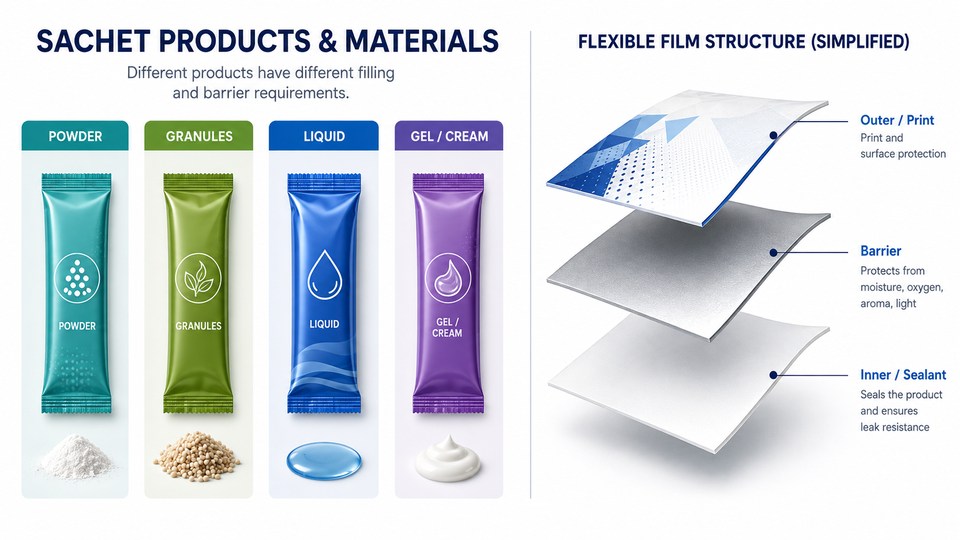
ซองบรรจุภัณฑ์สามารถบรรจุผลิตภัณฑ์ได้หลากหลายประเภท เช่น ผง เม็ด ของเหลว เจล ครีม และครีมข้น ดังนั้น วัสดุบรรจุภัณฑ์จึงถูกเลือกตามลักษณะของผลิตภัณฑ์ รวมถึงข้อกำหนดด้านการปกป้อง การปิดผนึก และการใช้งานของซองบรรจุภัณฑ์สำเร็จรูป
ผงและเม็ด
Fine powders can retain air, bridge, or stick, while free-flowing granules such as sugar and salt behave differently.
Powders can use auger dosing, while free-flowing granules can use suitable volumetric systems.
Seal-zone contamination is not simply a lack-of-space problem. Fine powder can remain airborne, cling to film through static, or continue to fall from the filling tube after dosing. Nozzle position, cut-off timing, dust extraction, static control, and settling time should be checked together to keep the sealing area clean.
Liquids, Gels, Creams and Pastes
The filling method depends strongly on viscosity: a thin liquid needs different pumping and nozzle characteristics from a thick sauce or cream.
Higher-viscosity products also require controlled filling and cut-off to keep material out of the seal area.
A sachet filling machine should therefore be selected according to both package size and product characteristics.
Sachet Packaging Materials
Sachets can use plastic films, aluminum-containing laminates, paper-containing structures, and other multilayer combinations.
Multilayer materials combine functions: an outer layer can support printing and strength, a barrier layer can reduce moisture, oxygen, or light exposure, and an inner layer can provide heat-sealing performance.
An aluminium foil sachet can be selected when stronger light, moisture, or gas barrier performance is needed.
Other products can use transparent, metallized, or paper-containing structures according to protection, appearance, cost, sealability, and storage needs.
4. How Are Sachets Made?
Commercial sachets are commonly produced by form-fill-seal equipment. Film is formed into the required structure, the necessary initial seals create a closed-bottom pocket or tube, product is dosed, and the package is finally closed and cut.
The exact web arrangement and sealing order vary with the sachet format and product.
Step 1: Film Unwinding and Feeding
Production begins with flexible packaging material supplied in roll form.
Thesmall sachet packing machineunwinds and guides the film toward the forming area while controlling movement and tension.
With preprinted film, registration marks help align the print, seal, and cut positions.
Step 2: Registration and Sachet Forming
The film is positioned and formed according to the required package design.
A back-seal format wraps film around a forming section before creating a longitudinal seal. Three-side sachets typically use one folded web, while four-side-seal lines typically bring two webs together.
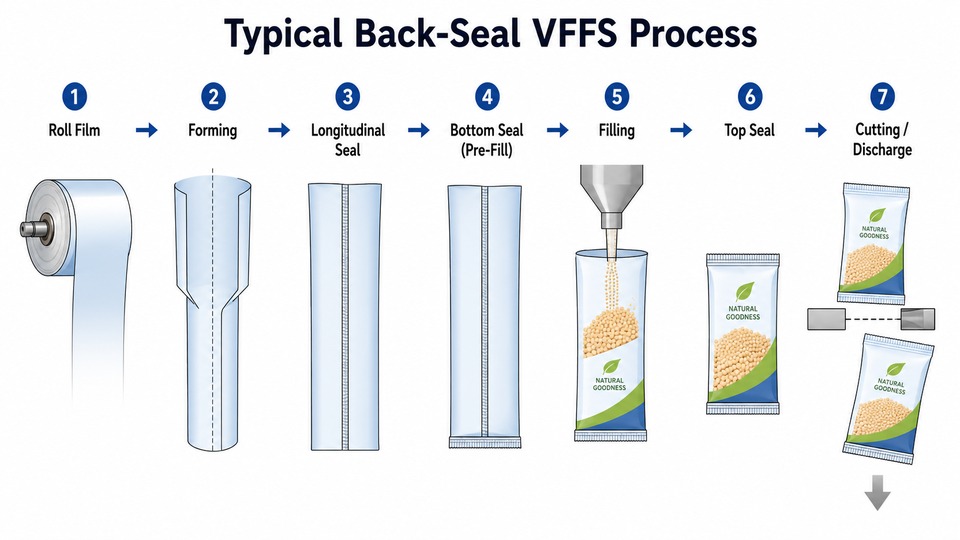
In a typical back-seal VFFS cycle, the longitudinal seal forms the tube and a cross seal creates the closed base before the product dose is released.
Step 3: Product Dosing and Filling
Once a closed-bottom pocket or tube is ready, the filling system measures and delivers the required dose.
Different products require different dosing methods:
- powders can use auger dosing;
- free-flowing granules can use suitable volumetric systems;
- liquids can use piston, peristaltic, or other suitable metering pumps;
- creams, gels, and pastes require filling systems designed for higher-viscosity products.
A sachet packaging machine must match both the package format and the product. Two products using the same sachet size can still require different filling systems.
Step 4: Closing and Sealing the Sachet
For a typical back-seal VFFS cycle, the bottom cross seal is already present before filling. After dosing and film advance, the horizontal jaws create the top seal of the filled sachet and the bottom seal of the next one in the same action. Three-side and four-side machines use different web paths and sealing sequences, but the product is still delivered into a package section that is already closed at the bottom or formed as a supported open pocket.
Heat-sealing performance depends on temperature, pressure, contact time, film structure, and clean sealing surfaces.
Powder dust, liquid droplets, or paste in the sealing area can interfere with reliable seal formation.
Step 5: Cutting and Discharge
After the closing seal, the web is cut into finished sachets.
The machine can produce individual or connected sachets, while coding, tear-notch forming, counting, or downstream transfer can be integrated when required.
For a typical back-seal VFFS line, the sequence is:
film feeding -> registration and forming -> longitudinal sealing -> bottom/cross seal -> dosing and filling -> top/closing seal -> cutting -> discharge
This continuous sequence allows a modern sachet filling machine to produce small packages automatically at production scale.
5. Why Is Sachet Packaging Used and How Do You Choose the Right Format?
Sachet packaging combines compact size, controlled portions, flexible material options, and convenient handling.
It is useful for single servings, samples, travel sizes, measured ingredients, and products kept individually sealed until use.
They are not ideal for every application. Small packs provide limited print space, product in the seal area can affect seal quality, and some multilayer high-barrier structures are difficult to recycle through conventional streams.
Choosing the right sachet should start with the product.
| Factor | Why It Matters |
|---|---|
|
Product form |
Determines the filling and dosing system |
|
Portion size |
Influences sachet dimensions and filling range |
|
Barrier requirement |
Helps determine the film structure |
|
Sealability |
Affects material and sealing conditions |
|
Sachet format |
Determines forming and sealing configuration |
|
Production output |
Influences machine speed and automation level |
|
Changeover needs |
Matters when multiple products or sizes share one line |
Production speed should not be considered alone. A faster machine adds little value if the dosing system cannot handle the product consistently or the film cannot form reliable seals.
For pharmaceutical, nutraceutical, food, and similar production environments, cleanability, product-contact design, material handling, andline integrationare also important.
Conclusion
So, what is a sachet?
A sachet is a small sealed flexible package for a measured or limited amount of powder, granules, liquid, gel, cream, or another suitable product.
The finished pack reflects several connected decisions. Product flow behavior, viscosity, and target dose first determine the dosing or filling method. The target dose and package requirement then define sachet dimensions and seal format; where a forming tube is used, these dimensions determine the suitable forming set. Barrier and sealability requirements then determine the film structure.
The selection sequence is:
product characteristics and target dose -> dosing/filling method -> sachet dimensions and seal format -> forming set or tube where applicable -> film barrier and sealability requirements -> sachet filling and sealing machine configuration and production trial
With years of experience in pharmaceutical and packaging machinery, Rich Packing provides sachet packaging solutions with product-specific filling, servo-controlled dosing, and temperature-controlled sealing. These capabilities help match the filling and sealing system to different products and sachet formats.
Frequently Asked Questions
1. What is a sachet?
A sachet is a small sealed flexible package used to hold a measured or limited amount of product, including powders, granules, liquids, creams, gels, food ingredients, supplements, and cosmetics.
2. What is the difference between a sachet and a pouch?
A sachet usually refers to a smaller flexible package for a measured or limited quantity, while pouch is a broader term covering formats such as stand-up, zipper, and spouted pouches.
3. What is the difference between a sachet and a stick pack?
A stick pack is a narrow, elongated single-dose format. Its seal structure can be back-seal or three-side-seal.
4. What products can be packed in sachets?
Sachets can handle powders, granules, liquids, gels, creams, and pastes when the filling system and packaging material suit the product.
5. What are sachets made from?
ซองบรรจุภัณฑ์สามารถผลิตจากฟิล์มพลาสติก แผ่นฟอยล์อะลูมิเนียม โครงสร้างที่มีส่วนประกอบของกระดาษ และวัสดุหลายชั้นอื่นๆ ที่เลือกใช้ตามความต้องการด้านการปิดผนึก การพิมพ์ ความแข็งแรง และคุณสมบัติในการกั้นสิ่งแปลกปลอม
6. เครื่องบรรจุซองทำงานอย่างไร?
เครื่องบรรจุซองจะขึ้นรูปฟิล์มม้วน วัดปริมาณผลิตภัณฑ์ ปิดผนึกตามข้อกำหนด และตัดซองที่เสร็จแล้ว ลำดับการวัดปริมาณและการปิดผนึกจะแตกต่างกันไปตามผลิตภัณฑ์และการออกแบบบรรจุภัณฑ์
เอกสารอ้างอิง
- ขั้นตอนการขึ้นรูป/บรรจุ/ปิดผนึกแนวตั้ง 101: ข้อควรพิจารณาที่สำคัญ นิตยสาร Packaging World.
- เกณฑ์คุณสมบัติของฟิล์มสำหรับการใช้งานบรรจุภัณฑ์แบบขึ้นรูป/บรรจุ/ปิดผนึกแนวตั้ง (Vertical Form/Fill/Seal Applications) นิตยสาร Packaging World.
- ระบบปิดผนึกภาชนะสำหรับบรรจุยาและผลิตภัณฑ์ชีวภาพสำหรับมนุษย์ สำนักงานคณะกรรมการอาหารและยาแห่งสหรัฐอเมริกา.
- นิยามของบรรจุภัณฑ์แบบยืดหยุ่น สมาคมบรรจุภัณฑ์แบบยืดหยุ่น.


 รองรับเครือข่าย IPv6